
John Henry
And How Solitary Confinement Leads To Suicide

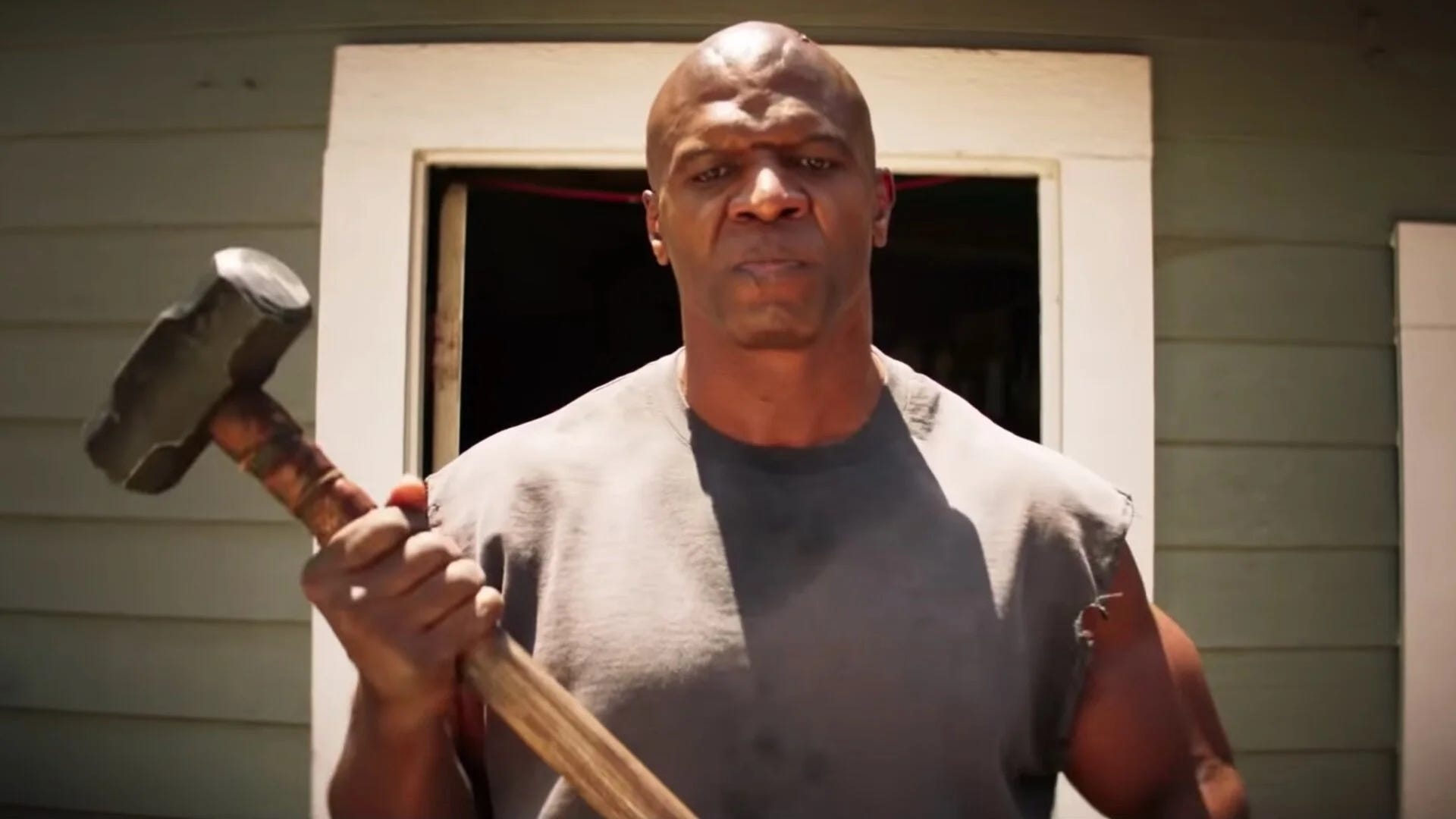
Terry Crews is one of my favorite performers in Hollywood. Really, I should say actor – he’s been known to take smaller roles in frankly garbage movies that utilize his size and physicality, and I don’t know if they can be considered acting. I sat still like Stonehenge during Adam Sandler’s “Click” with the exception of Crews’ dancing cameo. In those wretched “Expendables” movies, Crews’ Hale Caesar was the only character I would have willingly followed offscreen. For all his goofy short appearances, however, he was nimble and dynamic in four seasons of “Everybody Hates Chris”. And for all the iconography of his appearance, there’s a reason that the most unforgettable part of Mike Judge’s “Idiocracy” is his President Dwayne Elizondo Mountain Dew Herbert Camacho.
I’m not saying it’s a compliment, and it’s definitely not an insult, but it feels like the role Crews was born to play is in “John Henry”. This is a movie with genre bones, but it’s a slightly more upscale version of the movie it can be. Without being didactic, the movie centers Crews as a modern variant of the legendary fable, the silent brute who served as a legendary steelman up until his death. Here, he’s a kid from the streets of Los Angeles who has grown up with the expressed intention of avoiding the violence and nihilism of the streets, swearing off guns forever.
This has meant a mostly-quiet life, living in solitude with his father, the loquacious BJ (the great Ken Foree). The movie never gives a deeper focus to John Henry’s inner life, his relationships and philosophies, though this is in keeping with the myth – the neighborhood knows him as loyal and reliable, even if they don’t know him all that well. This leads him to taking in a runaway, a teenager from Honduras who has escaped from a gang likely intending to sell her into sex slavery. Though BJ speaks Spanish and John doesn’t, it’s the son who forms a deeper bond with the girl, hoping to protect her from greater harm. When her older brother comes by, earnestly hoping to help, John brings the girl closer, knowing that she’s safer under his roof then running away with a family member of empty resources.
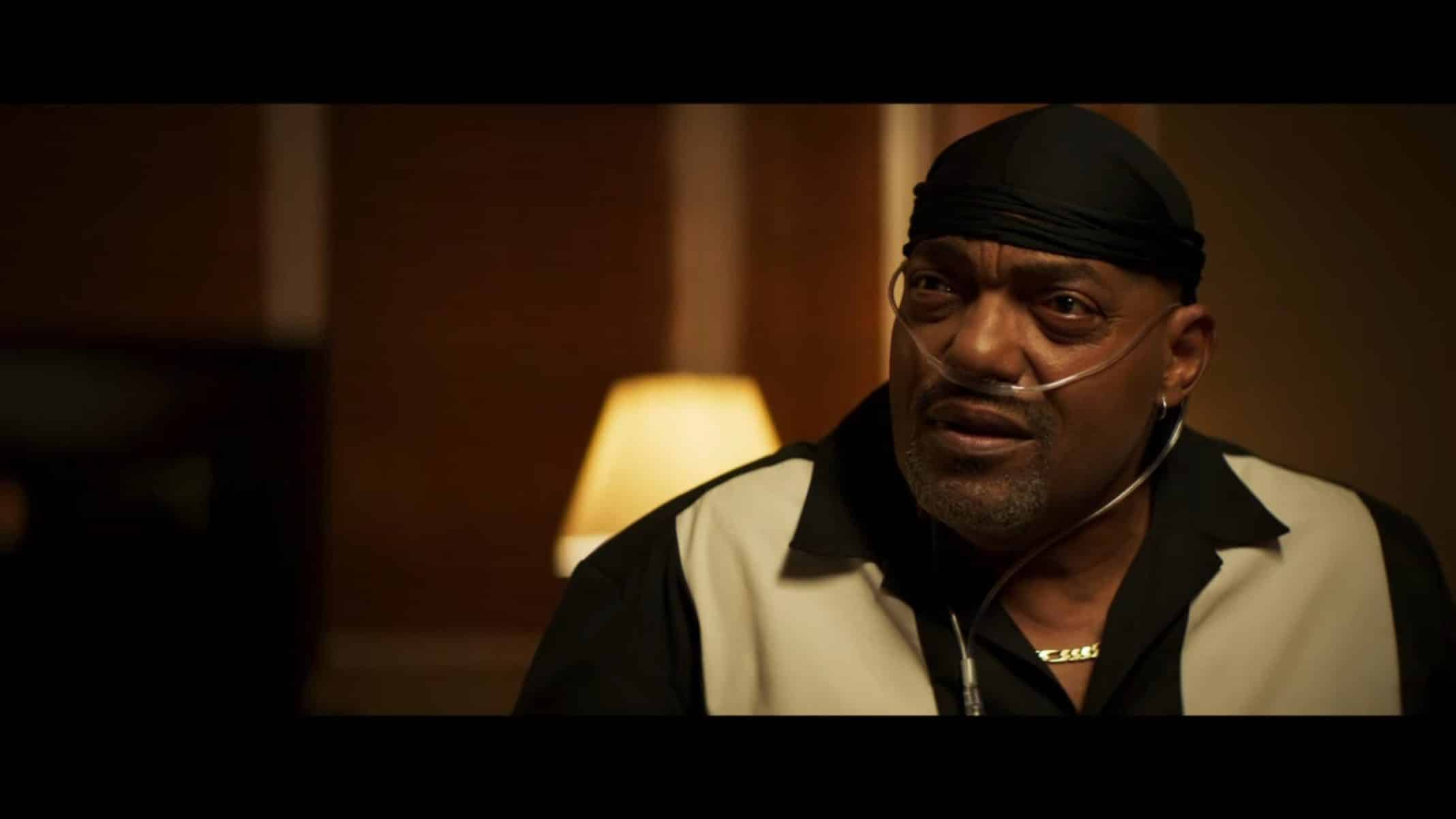
Through flashbacks, we see how John grew to be so principled, moving away from a life of crime. Though these are purely functional moments to move the plot forward (performed clunkily by young actors), it establishes an inevitable confrontation between John and his former co-conspirator, his cousin “Hell”. It’s an interesting comparison when you see the basic, firearm-less John Henry cast opposite Hell himself. As played by Ludacris (thankfully not as corny as he is in the “Fast And Furious” movies), he has a pimp cane and a brace for his broken jaw, one that is gold and studded with diamonds. Hell harkens back to a glamorous blaxploitation characterization, whereas Henry’s roots clearly come from an earlier cinematic era.
“John Henry” curiously begins as something of a character piece, letting these actors explore these archetypes. An early standout is Foree, who, in his last role to date, gets to preen and ham it up before a doozy of a final scene. He’s also an example of bold bravado, standing out alongside Crews’ John Henry, though his showboating reveals a tenderness that plays well against Crews’ own stoicism. This is one of my favorite types of genre pictures, a “henchmen” movie, where you get to know the otherwise-faceless goons who have to sit around and wait for hours, all while bemoaning their poor pay. One amusing scene features a goon trying to make small talk with another by bringing up “The Human Centipede”. I get it – it is a hard movie to talk about, isn’t it?

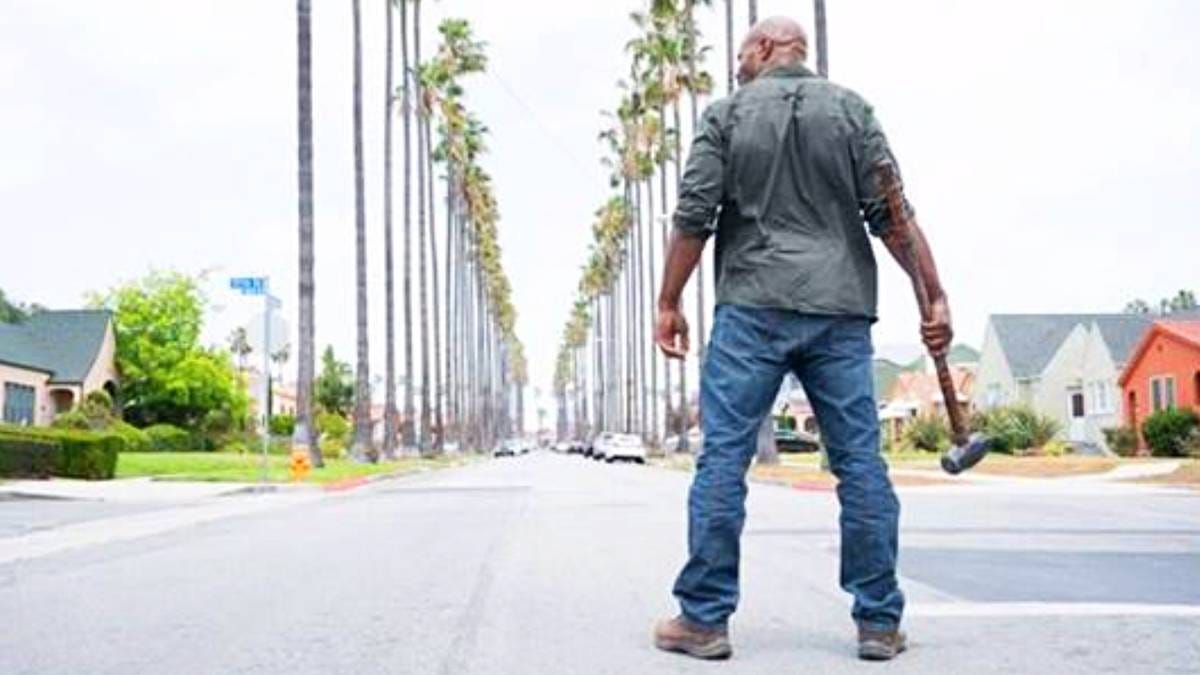
Of course, that good behavior on the movie’s part then gives way to the finale, as we finally get to see John Henry pick up his sledgehammer. Heads get crushed and people get fully sanctioned. It’s a little bit like some of those blaxploitation movies of the seventies, many of which had notorious reputations based more on scandal than conflict – many exploitation movies of that era, of all kinds, were talky and quiet until a sudden burst of violence in the finale. A lot of the appeal comes from seeing Crews letting loose, intimidating and powerful, towering over his enemies. He’s a hero, and as it is whenever you see him in an action movie, you’ll cheer him on but you don’t want to have to pick up the pieces afterwards. It’s a modest movie of modest pleasures, but Crews stands out, both as a performer who conveys so much with a scowl as well as a blunt object you can’t wait to see destroy all that surrounds him.
I was pretty surprised to see that “John Henry” carries a ZERO percent rating on Rotten Tomatoes. Look, I’ll be candid about this – I HATE Rotten Tomatoes, I dislike that critics write sometimes-complex, sometimes-interesting reviews only for an algorithm to boil them down to a number. It’s banal, and when we’re talking about art, it’s vulgar. In this case, this ZERO rating can be explained by “John Henry” being released during the pandemic, when very few people were actually being paid to cover movies. But it still seems unjustified, particularly if you’re going to note that “John Henry” has a unique rhythm that comes from original music from writer/director Will Forbes, some of them smooth R&B, and some a few original rap tracks that avoid being obtrusive and instead compliment the action. Of which, again, there isn’t much – maybe if you’re in the house during a pandemic, you want a little more of this. Regardless, “John Henry” deserves better.
Yesterday I wrote about deaths in prisons in Seattle, Washington. But it’s not something limited to the Pacific Northwest. Indeed, in prison, a place where being in-custody means being in-custody (and therefore isolated from many dangerous variables), there are so many ways to die, and many are preventable. In New York, they’ve struggled with circumstances where guards have acted irresponsibly (criminally, really) to subdue inmates, leading to a number of higher-profile murders in prison. In addition to these confrontations, there’s a report that clearly ties the number of suicides to inmates who have received solitary confinement, a condition many prisons have claimed they’re trying to eliminate, even though little action on this front has ever truly been taken.
This is a problem towards which I am at least somewhat sympathetic. Often, people are placed in solitary confinement in order to preserve their safety, to keep them from those who might endanger them. People “check in” to the SHU (which can sometimes be solitary, and sometimes be an isolated two-man cell) because they “fear for their life” (a phrase that comes in handy very often). The problem lies in how only a handful of guards can properly monitor solitary confinement realistically, and how the structure of solitary confinement rewards officers who don’t wish to use extra effort in order to police a caged inmate population, therefore leaving them absent to attempts inmates make on their own lives. Yes, there can be attempts at reforming this particular system. But maybe it’s worth acknowledging that solitary confinement does not work, and it drops the mortality rate of those who are held in those smaller cells outside of general population. Maybe, like many aspects of incarceration, it’s a system that simply serves no efficiencies. Maybe a superficial fix isn’t actually a fix at all. Only when these inmates and prisoners are seen as men and women will the system change.
Wow, this is incredibly low-rated on letterboxd too, and I had never heard of it before now! But you make elements of it sound interesting, and the eternally underappreciated Ken Foree + Terry Crews as a father/son combo is definitely enticing to me.
I like review aggregates because I appreciate getting other people's opinions. But I understand dissolving a movie to a score as the end all, be all being destructive.
I also appreciate your thoughts on movies, even if I don't always agree.