
Wendy
And Districts That Don't Believe In Science

I don’t know what rock criticism is anymore – I don’t think rock criticism is really a thing anymore, is it? But there used to be certain cliches of the profession, little go-to’s that reflected, more often than not, a lazy writer or an inarticulate grudge. Something I noticed in my youth was that certain bands would be lauded for a first album that introduced and honed a sophisticated, developed sound, and critics would review that first album by, essentially, automatically reviewing the second nonexistent one, suggesting this would be a career that would grow in a linear, familiar fashion. Which would lead to the flip-side, of course – journalists who would then proceed to abandon those bands or acts because their next, solid albums would recreate the same sound and preserve a predictable baseline for success. Oh no, it’s a great album just like the last great album, where’s the breakthrough ambitious Second Album I forecasted in my head?
Behn Zeitlin seems like a guy who would fall for this imagined sophomore slump. In 2013, his “Beasts Of The Southern Wild” received four Academy Award nominations, including for Best Picture. There were controversies surrounding the film, particularly in regarding how bits and pieces of certain cultures were used to create, basically, a make-believe world. But the film certainly stood out nonetheless, an imaginative phantasmagorical tale of a young girl who led her people through dangerous terrain to relocate after their homes were displaced in a hurricane. The picture was driven by loaded notions of place, of belonging, of family, but much about the picture – including its mythological creatures – was homemade, pieced together like Frankenstein art. Though the film reaches tragic depths, it is ultimately a tale of triumph.
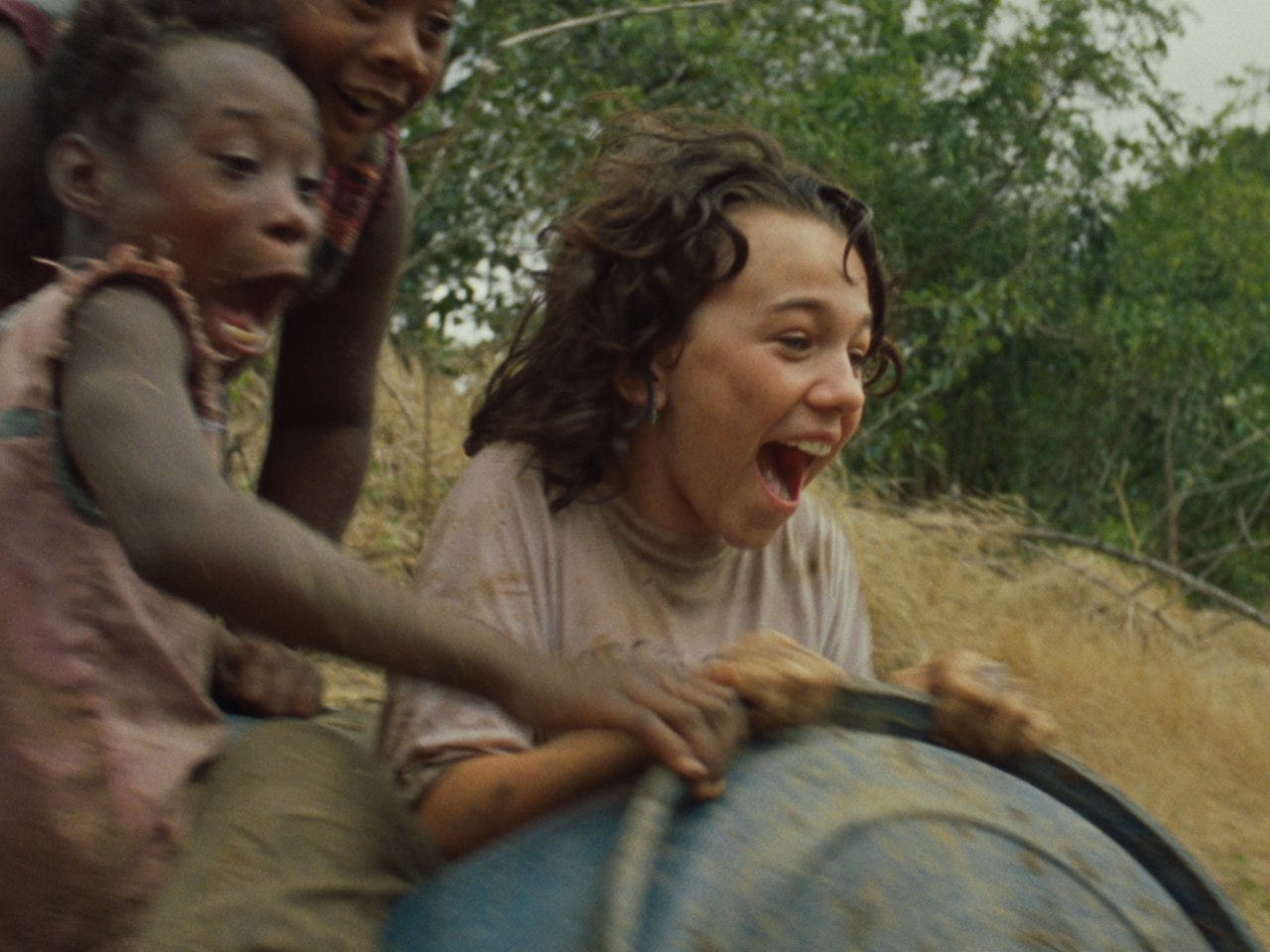
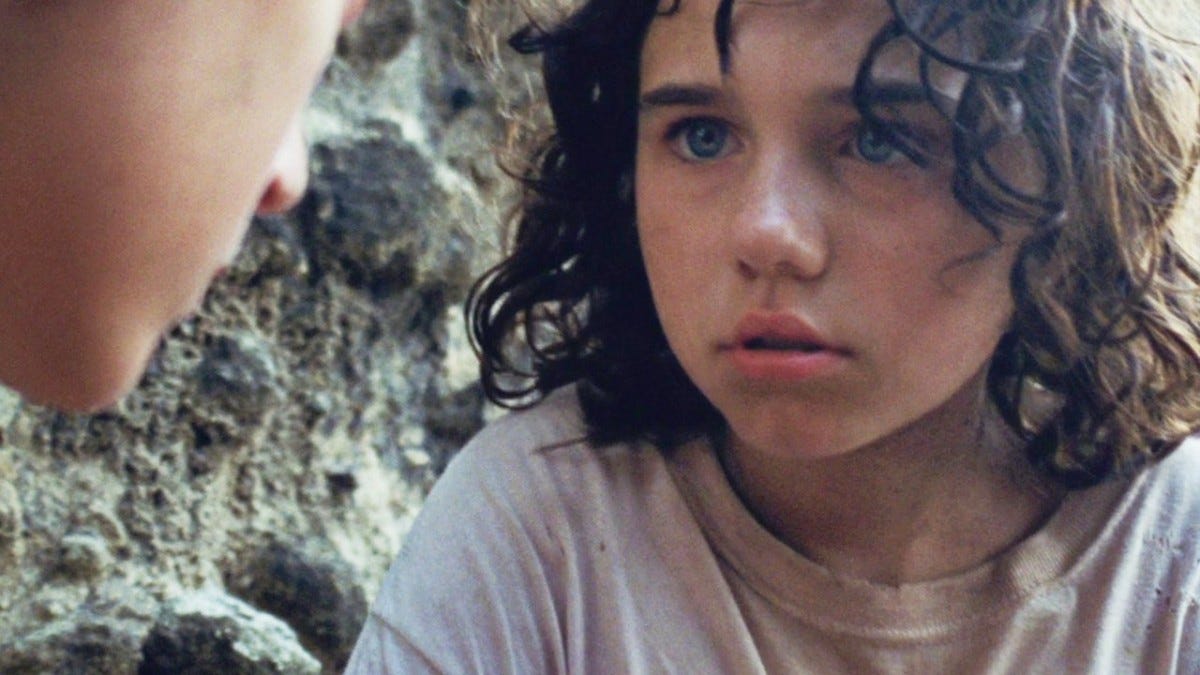
Well, his next film, “Wendy” was also a phantasmagorical tale of a young girl leading her people through dangerous terrain. “Wendy” was not so well-received, a problem compounded by the film emerging from the fog of COVID. Despite being the followup picture from a former Oscar wunderkind, it very quickly faded from existence, despite Zeitlin again returning to the well for, basically, his second album. I’m not sure what the critics were expecting, but the knives were out this time.
Maybe it was because, technically, this is IP! This is no ordinary Wendy, this is the Wendy of Peter Pan myth. But don’t expect flying and alligators and Captain Hook. This is the myth, but told through an entirely new perspective, a grounded, believable myth. The cheap, trope-y way to take this approach is to make it “gritty” and “harsh”, but despite the emphasis on realism, this remains an upbeat, hopeful tale. Though those of you complaining about how “woke” this is, then yes, this does make the case that Wendy is the more brave and heroic of the two of them, Wendy and Peter. So if that bothers you, fix your attitude and fix your life, I doubt anyone sincerely likes you, and you’re gonna die with irrational hate in your heart. Also, you’re an idiot and a jerk, I don’t want to leave that out.
This Wendy is in the South, an adolescent with a mother who works her butt off at a menial job to keep a roof over their heads. Since Mom is always gone, Wendy is the head of a household with two rambunctious brothers who can’t sit still. They need her more than she needs them. But it’s the call she can’t resist, the call to adventure, the bustling train in the horizon calling her name. She chases a boy and they both end up on top of the train, speeding into an unknown tomorrow. The brothers follow their sister, because what would they do without her? They’re Lost Boys.
This is just the beginning of these adventures, but it’s worth noting just how exciting this train sequence actually is. As the stormy sky rages above them, Wendy marvels at how exactly she’s ended up in this position, just as you’re wondering if she’ll stay safe in this dangerous moment. The weight of this sequence is considerable, the idea that she’s never been away from home and now she’s moving faster and faster in the opposite direction with no return in sight. It’s a moment that feels like it lasts years, as if Wendy is experiencing so much in such a short amount of time. In any other circumstance, it would simply be terrifying. In “Wendy” it’s a confluence of so many competing emotions, told primarily through visual language.
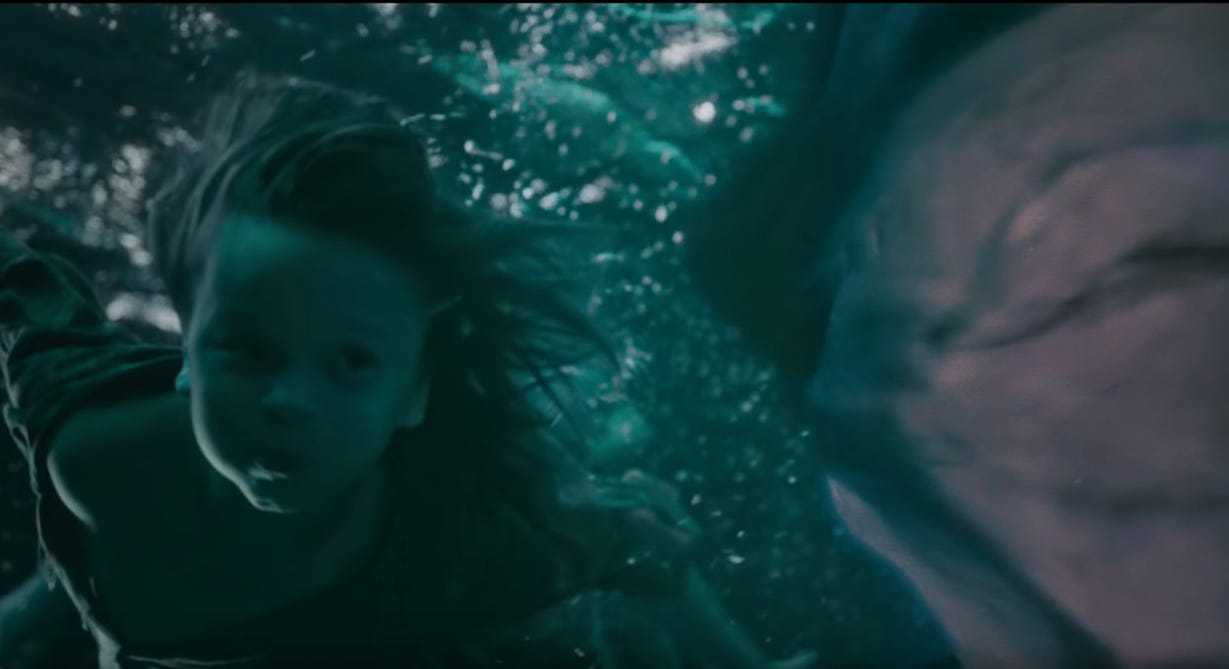
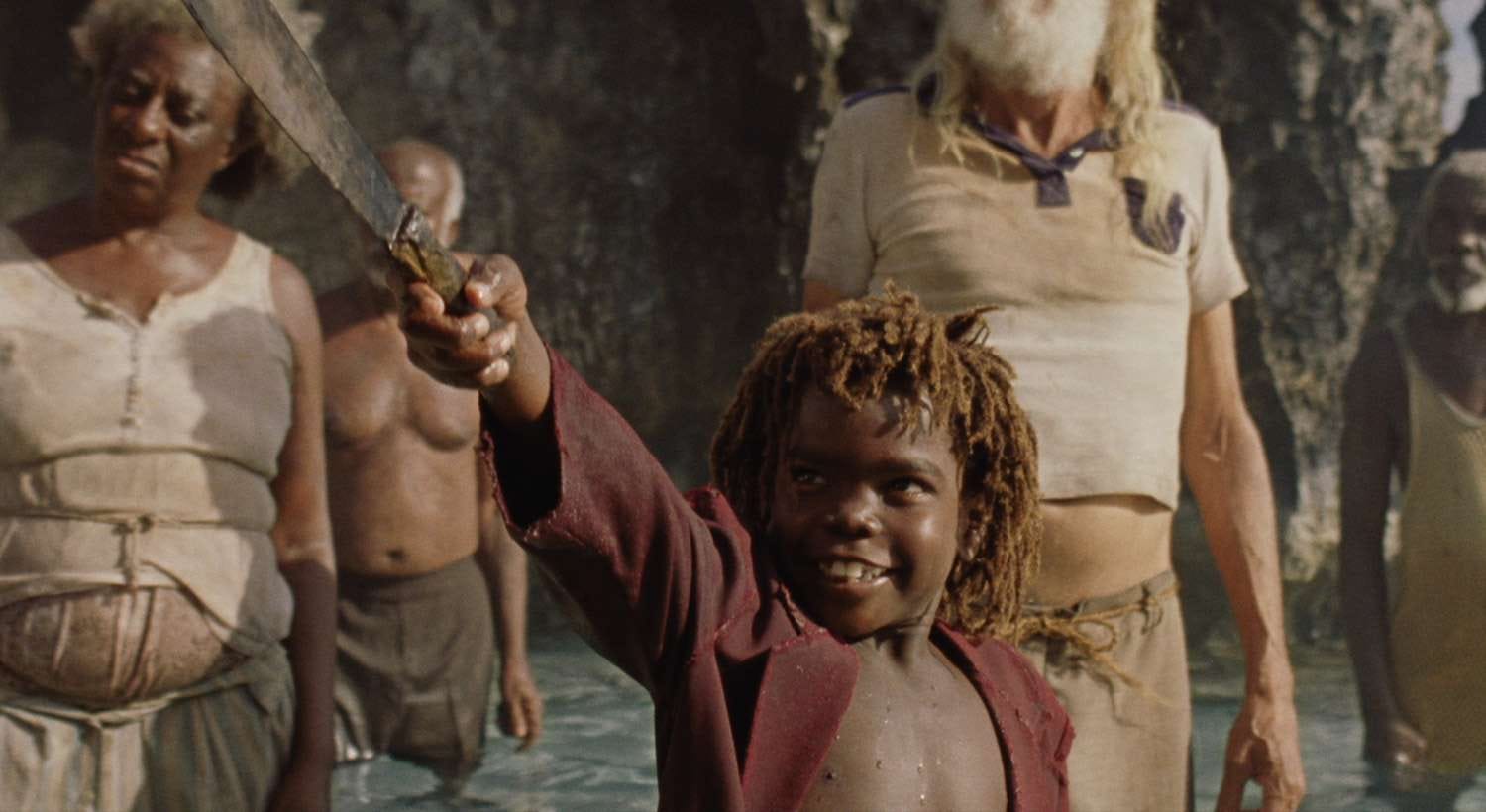
Eventually, Wendy and a few Lost Boys reach an island. Those of you complaining about a lack of “magic”, well, you get it here. In very small ways, the island is alive, from its geysers spouting from the ground (which seems fantastical as to be an effect, but maybe not!) to the volcano boys say keeps them young. There is a ship of “pirates”, which are primarily kids who were once Lost Boys who began to age, but they’re hardly adversaries. The proposal, in honor of the volcano they believe is their mother, takes them underwater. In “Beasts Of The Southern Wild”, Zeitlin’s production team memorably created aurochs, which appeared to be wooly mammoths that let a thick head of hair descend onto their bodies. The same detail towards practical effects continues here, as the undersea creatures appear massive, frightening, and tactile. There’s a lot of unassuming deep-sea footage here that doesn’t exactly worry you that these child actors were in danger, but it does make you question exactly how these effects were achieved.
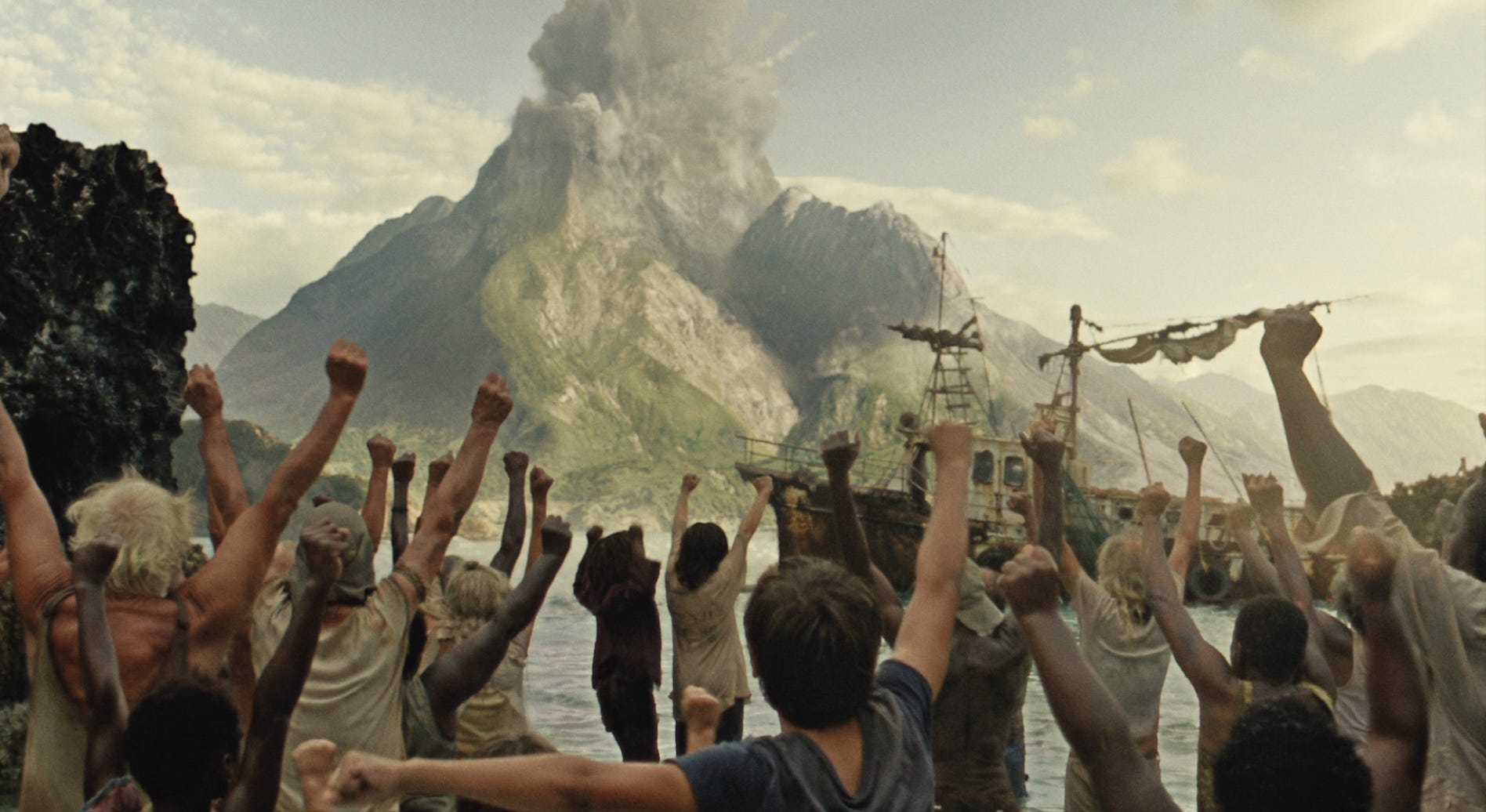
“Wendy” is not in a rush to get to a conventional plot, instead reveling in the sense of play exhibited by the children on this island. I suppose a cynic would be unmoved by these kids running and screaming and playing make-believe on an island that almost seems to respond to their behavior and, in many ways, their spirit. Look, I don’t like rambunctious kids either, I don’t want them in line with me, I don’t like them on public transportation, and I definitely don’t like when they’re responding to sadness or anger or any other emotion they’re not equipped to fully understand. But in “Wendy”, you remember. You remember when you were that age, and anytime you ran outside, you were running towards a gigantic world. And you knew you weren’t protected, but because of how small you were, you would be protected – by friends, by family, simply by the calculus of the universe that preserved the curiosity of kids like yourself.
The movie is largely a sensory experience, and part of that comes from the score. Zeitlin collaborated with Dan Romer on the music for “Beasts Of The Southern Wild” – somehow, that wasn’t one of that movie’s four Oscar nominations, it’s one of the major scores from that era I revisit regularly. This time, on “Wendy”, they worked on a similarly rousing set of compositions that swell and envelope the film’s emotions at key moments, unapologetically brassy and horn-based. Of course Oscar nominations were not a major issue here. “Wendy” was given a desultory theatrical release shortly before the pandemic shut society down. You’d think that would make the film stick out even more considering the very few mainstream films of that year, and yet “Wendy” seems like it’s been forgotten. I’d have expected the score to surface, repurposed, on the trailer for other movies. At least it’s available for you to discover. I think it’s a special one, and I hope you do.
(By the way, both Joe Wright’s “Pan” and David Lowery’s “Peter Pan And Wendy” fall within the purview of this Substack, but I had no intention of seeing them. Should I?)
Most people are aware that the law differs based on each state in America. Sometimes the discrepancies are pretty wild, the same crime can yield different results in different territories. If you’re someone who travels a lot, I would encourage you to learn the laws extensively, should you decide to break one (not that I’m encouraging that, but, you know, when in doubt, jagabando). But on a federal level, there are twelve separate regions across the country. With so few options, it can mean that certain districts have wildly different interpretations of legality. This becomes particularly crucial when appealing your conviction. During appeals, you have to cite some sort of precedent in regards to your case. However, you’re going to want to point to prior cases that were specifically decided in that district, with the awareness that different districts might have a history with certain charges or crimes that aren’t present in others. Specificity seems to matter moreso when proving your own innocence, less so when they have to prove your guilt.
Rarely do you have a difference between districts on the basis of science, however. More specifically, a district has to be motivated to change standards based on more than that apparent truth. In this case, a woman has been serving a sentence for decades now for killing her children through an act of arson. Since that case, the rules on determining what qualifies as arson have changed drastically, particularly in challenging the methodology first used. This woman is not necessarily asking for her freedom, she is merely seeking another trial. Despite knowing that the new standards are the best way to re-evaluate this case, the government is refusing to hear any of it. My knee-jerk reaction is that they wish to simply further their cruelty towards someone in custody. But the truth is much more banal – the reason why they aren’t re-evaluating her case with the proper scientific methods, and establishing the difference between an innocent mother and a child killer, is all for the savings. It’s the cost of having a trial versus how it is just cheaper to ruin a woman’s life and have her branded a child murderer for life. Yes, it’s cruelty, but it’s also just basic. These are basic people.
It sounds better than Hook.