
The Whale
And Weight Loss In Prison

There’s a funny story Darren Aronofsky once told of his early days in the industry. He wanted to get his own original scripts made (notably “The Fountain”) so he would simply take one meeting after another for movies he had no interest in making, largely IP. He would feign interest in this specific vision of Superman or whomever, and at the very end start flashing original pages, suggesting that if they like his ideas about certain properties, they’d also have to give him money to make something fresh once he’s proven to be profitable. Supposedly he played chicken with this routine until he found himself in pre-production on “The Wolverine”. During development of that film, he soon saw his “Black Swan” become a surprise mainstream hit ($330 million worldwide), meaning that he no longer needed “The Wolverine”. So he dipped out of the world of X-Men to secure funding for his Biblical epic “Noah”.
I think about that when I see the chaotic twists and turns Aronofsky’s career has taken. How many of his movies were jobs he was trying to get out of? His early career seemed driven by maximalism, big emotion, loud music, bombastic themes. But in the last decade he seemed to be picking movies out of a hat. His “mother!” was infamously derided when it was released, and while it was certainly grandiose in familiar ways, it only took place in one location (and, theoretically, over the course of a small period of time). But I was surprised to see him tackle “The Whale”, which also takes place largely in one location, but seems limited by the lead character’s lack of mobility, as well as the source material being a play.
More significantly, Brendan Fraser? I pushed this movie off for a while, considering Hollywood has too much of a love affair with limited actors. Brendan Fraser in a prestige movie sounded like a joke from “The Critic” – he’s had a not-terribly-impressive career, starring in family films for the least demanding children’s audiences. Beloved for being what sounds like a nice guy, Fraser moved ahead in his career because he could play guileless. He strikes the right balance of naivete and earnestness in films like “Blast From The Past”. But that doesn’t mean you can just put him in the hands of someone who chopped up Jared Leto’s veins, peeled back Mickey Rourke’s skin, flayed Jennifer Lawrence’s infant child. This is “Dudley Do-Right” we’re talking about, right?
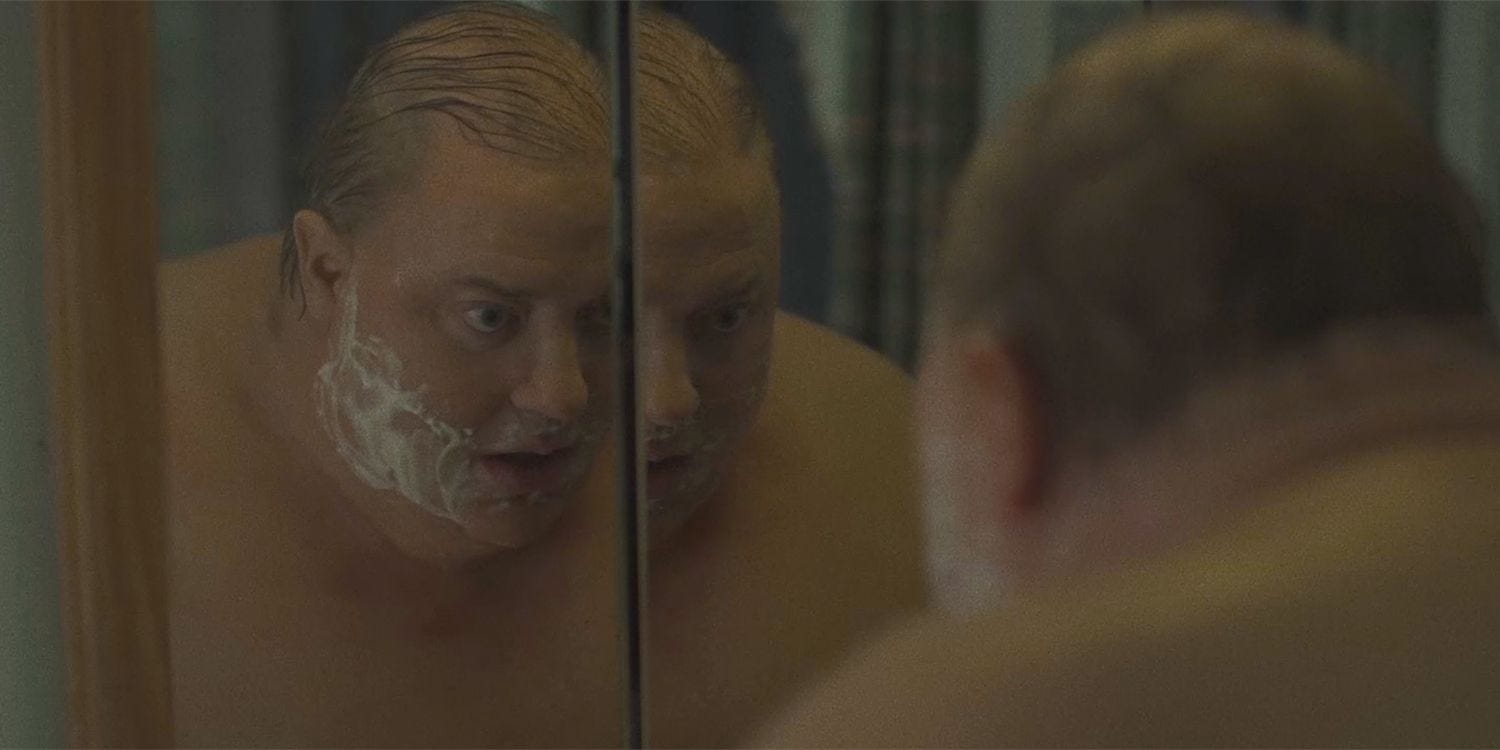
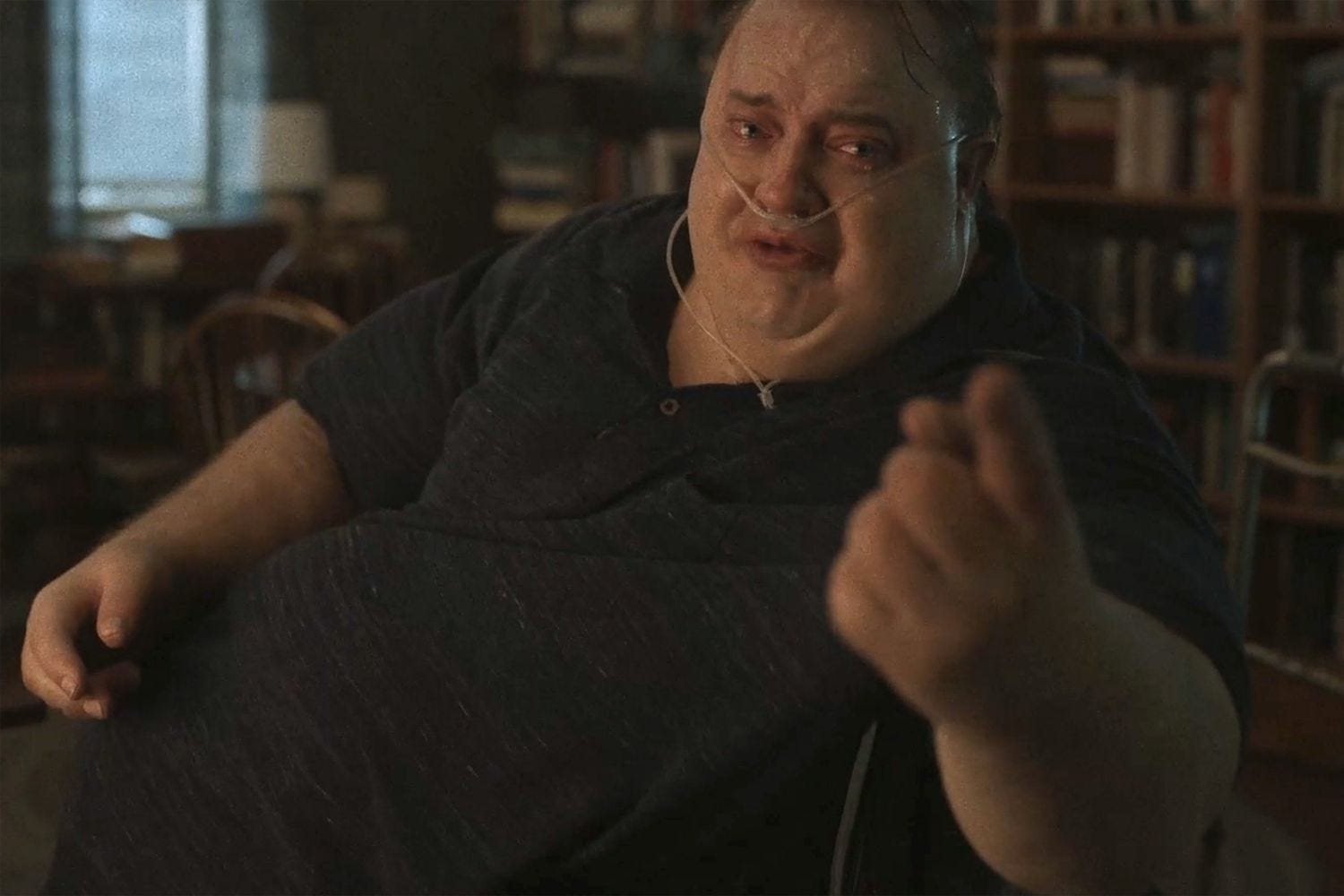
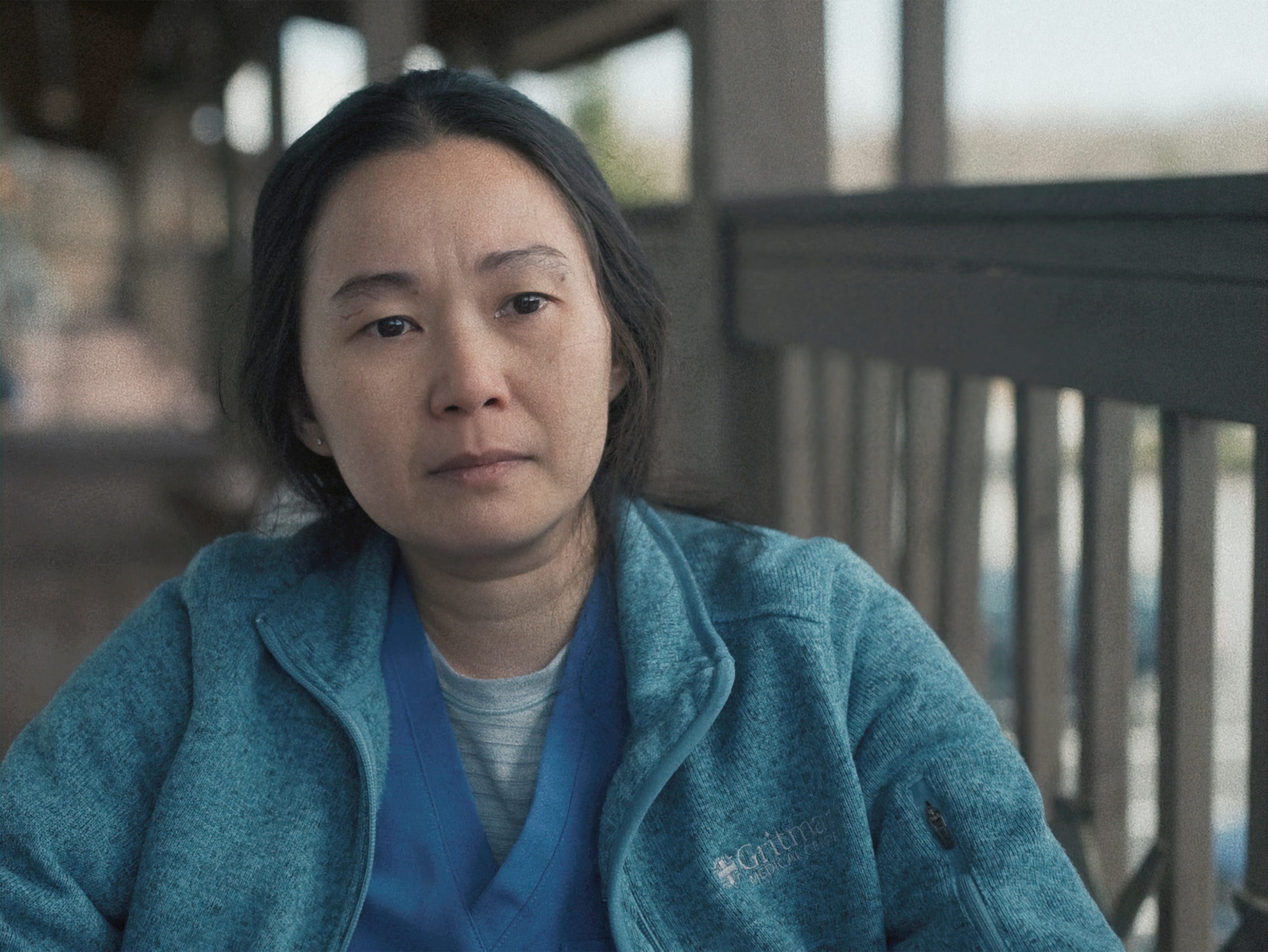
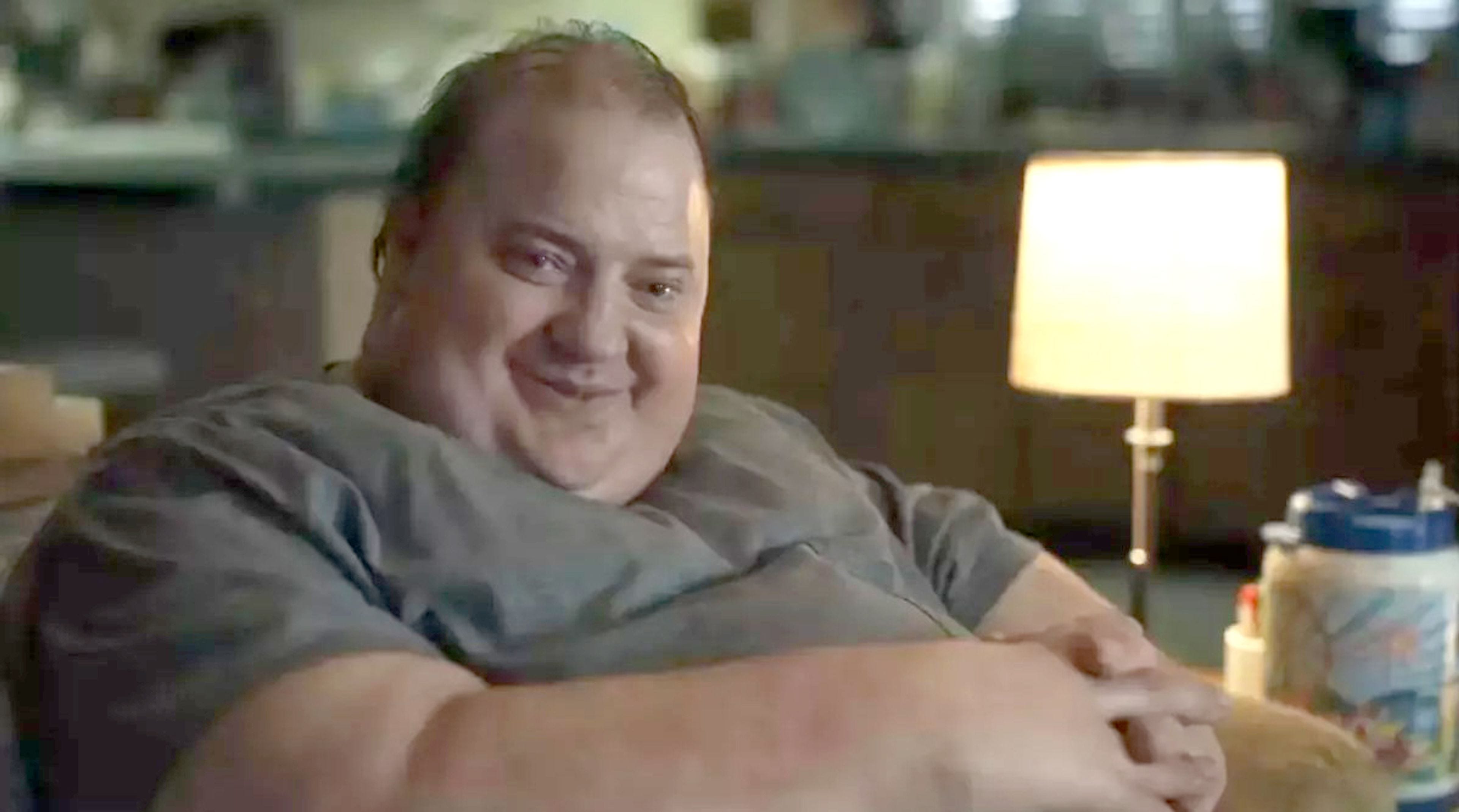
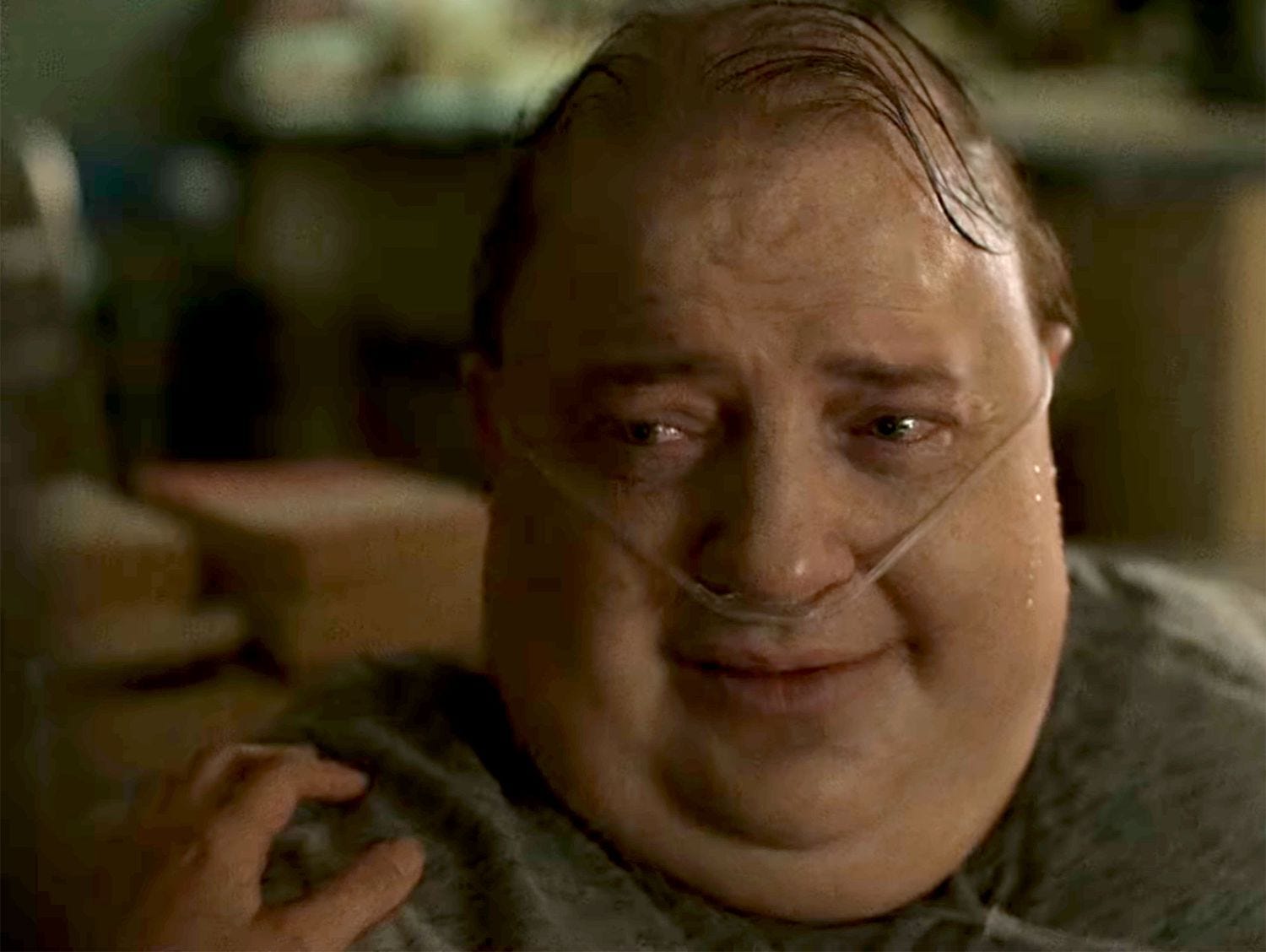
In “The Whale”, Fraser’s Charlie is a pitiable figure. He’s getting caught by people as he masturbates to pornography. He’s ordering gigantic meals via delivery from a guy who grabs money from the mailbox. He’s 600 lbs., affixed to a couch that appears to be on a shaky foundation. Forced inside with respiratory problems, he feuds with his nurse Liz (Hong Chau), who is stuck between humoring Charlie’s hunger and helping to fix it. It’s not clear how old Charlie is, but he’s aged enough to have a number of regrets, regrets he shoves down his throat and chases with food.
Aronofsky’s style has changed, but his central ideologies have not. These humiliating details used to illustrate Charlie’s life with blunt force efficiency are not all that different from the music video-inspired visuals of his earlier films. I’m thinking specifically about “Requiem For A Dream”, which turned being a junkie into a horror film, with pulsating, festering open wounds, chattering yellow teeth and exposed, worn neon-drenched skin. Given that movie’s attempts at moralizing (effective, you’d have to concede), it feels a little over-the-top to employ a similar approach to a man slowly eating himself to death out of pity. Unlike that earlier film, which employed jittery edits to upset the viewer, here Aronofsky lingers on Charlie’s physical condition, and it stretches out each moment of indignity. It just feels like a different sort of sadism for the same purpose.
Of course, perhaps that’s unavoidable with material like this. Charlie utterly despises himself, to the point where he teaches a class over the internet, but with his cam turned off. He can’t bear others seeing him, but it’s arguable as to whether he can look at himself. This is not just an arrangement born out of his own indignity, but possibly out of a certain need – a past controversy involving an ex-student seems to overshadow his career. The student was Charlie’s own salve after having fleeing the arms of his own wife (Samantha Morton), and it feels pertinent to add that the student was male. This drew a schism between himself and his daughter Ellie (Sadie Sink). All of these plot points, summarized, feel cruel. It’s like I am hurting Charlie.
There’s a common trope about “Burying Your Gays”, about how LGBTQ characters are subject to the brutalization of heteronormative plot dynamics and must be defined by their own societal marginalization. They can’t be allowed to be happy, and often the trope is literal, as LGBTQ characters die in order to further a larger narrative. For long periods of time, theis movie feels like an extended take on Bury Your Gays, as if Charlie is being murdered in real time, in front of us. To the viewer, he is behind a plexiglass window, quietly suffering through what might be his final days. Fraser is surprisingly subdued in the role, but that’s largely because the overwhelming emotion he has to play is shame. Shame as the murder weapon for the dehumanized man.

“The Whale” finds respite in those who wish to illuminate Charlie’s life. Chau, such an underrated character actor now known for bringing the thunder quite regularly, provides the strongest moments of levity as Charlie’s caretaker. This is something of a facade, unfortunately – her Liz curses herself as she serves a terminally-depressed Charlie a bucket of chicken wings while cracking jokes, even as she says that tomorrow will be different, more healthy. And, in one of the movie’s touches to emphasize this is based on a play, Charlie develops a vaguely-platonic bond with a door-to-door missionary (Ty Simpkins) who offers a pre-made salvation for a repentant Charlie.
But visually, this is a dark and downbeat watch. Aronofsky is so obviously skilled as a filmmaker that you never feel the limitations of the space, it always feels big and cinematic, the frame constantly active. But the colors are relentlessly bleak and oppressive. The film was shot by Aronofsky’s regular DP Matthew Libatique, but it closely resembles Jeff Cronenweth’s work on “Gone Girl”. Libatique’s work has more of an emphasis on structures and layers, and the visuals linger even when the story doesn’t. But for a two hour movie, it’s visual punishment, just a hopeless digital color scheme that bleeds all color out of the last days of Charlie.
All this as Charlie actively fears the return of Ellie. She’s the shark of this “Jaws” tale, and when she emerges halfway through the narrative, you’re even warning the young missionary to hit the road. Ellie is not a one-dimensional villain, per se, but on the page (and in Sink’s performance) she lacks that dynamism. She is just another harbinger of Charlie’s doom, and a reflection of his flawed past. He’s desperate enough to beg for her attention, but he’s doing it as a father, not as a friend. He’s doing it out of thinly-veiled obligation, thinking that a daughter’s love can heal him, and he can undo the past. She’s a talisman to him, a MacGuffin, not someone he wants to love, rather someone he knows can save him. She is several of Charlie’s indignities wrapped up into one, to the point where his giant frame cowers when she is angry. She should be the final indignity, but Aronofsky is a child of spectacle. At the film’s end, there’s one final bit of maximalism. I partly admire the swing, though it’s an aggressively bad-taste conclusion that betrays the very human scope the film already showcased. The movie’s not shy, I’ll give them that.
I was always concerned with weight when I was in prison. Initially, when I was arrested, and when I was at one of many extremely low points, my body worked in overdrive to sweat and fret the weight away. In my first four months, I lost well over fifty pounds. The meals, three per day (often just two as I tired of waking at 6 AM for a slim breakfast), were insubstantial, and I did not yet have access to what I soon realized was a flimsy commissary. I was on the basketball court for hours, even though the court was indoors, in a “gym” that was maybe thirty-by-one-hundred feet (we were never allowed outdoors). I was a federal inmate, mixed in with state inmates, some of whom had just come off the streets. Many of them got winded very quickly, so I was able to win more than a few games one-on-one. This was county, where I was awaiting sentencing. I spent fifteen months there. Once I left, I ping-ponged to a couple of places. Over that Thanksgiving, I was at another, nicer facility. They served turkey, ham, stuffing. The first real food I had eaten in fifteen months. I wanted to kiss the ground.
When I arrived at a federal institution, they had a commissary, so I could snack a little bit while spending responsibly. I gained some of my weight back, a little bit more muscle, but I was still much thinner than I once was. I used to get “The Big Shabang”, a type of potato chip that had multiple flavors in one bag – I would grit my teeth, knowing that wasn’t how you spelled “shebang.” I stayed healthy over there for years, until I ended up at another facility, one with a much weaker commissary. I started to lose weight again, spending hours on the treadmill. My Saturdays involved a ten mile run, followed by a relaxing shower and a long afternoon nap. And then COVID hit. Commissary grew sparse, trucks stopped making shipments. We stopped going outside. I spent my remaining years in federal prison on my back. I was losing weight, but also definition. I was formless. When I got out, finally, I luxuriated in the idea that I could eat what I wanted. I cheered the possibility I could order a fudge Sundae online at 3 AM. I am fairly healthy right now. But when I got out of prison, I very happily put on pounds again. I never again take it for granted that, if need be, I can eat without abandon.
Coming up, Happy Independence Day! It’s AMERICA WEEK!
What do you suppose are the odds of Disney or Universal buying Aronovsky out? It would be great fun to see the Whale, the Wrestler and "the Poet" as characters in the same film.
I didn’t like The Whale because it was false. The daughter being a “good person” is irrelevant to his real issues, which he never does face.