
The Double
And Performative "Justice" -- Relief For Jelly Roll

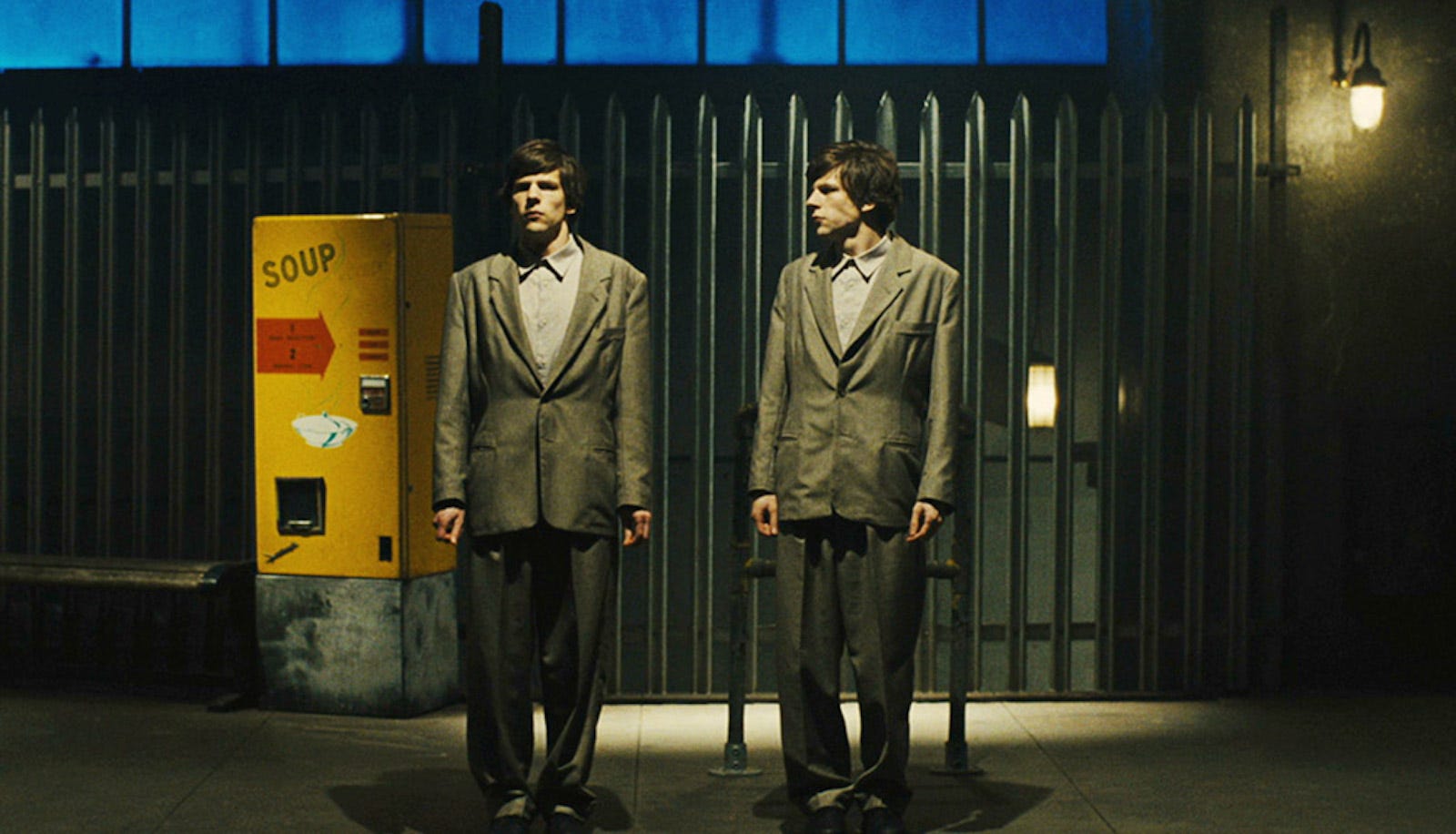
Welcome to a wild week of DOUBLES! It’s pretty hard sometimes to locate a unifying theme for five distinct movies within a period of over a decade, but sometimes, it’s easier than you’d think. And there were no shortage of movies about doubles, dopplegangers and clones over the course of my time in prison, even when ignoring movies I caught while I was incarcerated, and that includes brilliant stuff like “Annihilation” and “Us”.
I figured I’d start at a pretty concrete place, so I’m going with Richard Ayoade’s “The Double”. Ayoade, a rightfully-revered comic mind, crafted a pleasurable coming-of-age film with his debut, “Submarine”. Obviously, modesty went out the window, since for the followup he opted to adapt Dostoyevsky. Yes, “The Double” is THE “The Double”, an ur-text of doppelgangers dating back over 150 years. I tell you, this reboot culture is truly out of hand, are there any more original ideas? It feels like everywhere you go, mainstream audiences are being force-fed a steady diet of endless Dostoyevsky adaptations, and frankly, I think it’s pandering.
Jesse Eisenberg, something of a perfect match for the worldly, erudite Ayoade, slips into the shoes of Simon James. He’s a worker drone slaving away in a cubicle that looks dismantled, in keeping with the film’s moody futuristic design meant to deconstruct the modern workplace. Simon is, clearly, expendable, and his job has worn him down. A manager (Wallace Shawn, of course) browbeats and diminishes him; a boss (James Fox) doesn’t even acknowledge him. Simon seems destined to train young people to replace him until one day when he’s ready to be replaced. At one point, you see him suffer the indignity of a dressing down by his boss while he’s helping a much younger nepo-baby hire.

Simon ends up training the woman he’s been watching for a while from across the way, his neighbor Hannah (Mia Wasikowska). Before the shy wallflower can properly make a move (or, perhaps, before she’s noticed), the job greets the arrival of James Simon. James Simon, also played by Eisenberg, seems like a mirror image, distorted to suggest he is far more cool and cocksure than his counterpart. Simon immediately resents James, for obvious reasons, not least of which how he may have attracted Hannah’s attention. Still, James is also different in how he has the empathy Simon lacks, and so James seeks to assist Simon in possibly attempting a “glow-up” of a kind.
Of course, you don’t need to have read the book to see where this goes wrong. Part of James’ proposals involve swapping out for each other, which causes confusion and hurt feelings. Not only are both men suddenly pursuing Hannah (with Wasikowska giving a wily, eccentric performance), but they’re also tied up with the boss’ (too-)young daughter. Depression runs through the blood of most of these characters, as befitting the film’s unusual dark indoor sets, which remind, visually, of Terry Gilliam’s “Brazil” (which, in turn, likely drew more than a little inspiration from Dostoyevsky). “The Double” is oppressively downbeat to the eye in a way that seems almost parodic. You see it in a scene where cops pontificate to Simon how a suicide victim could have at least employed ether a better strategy or a more disciplined form in his fall from the rooftop.
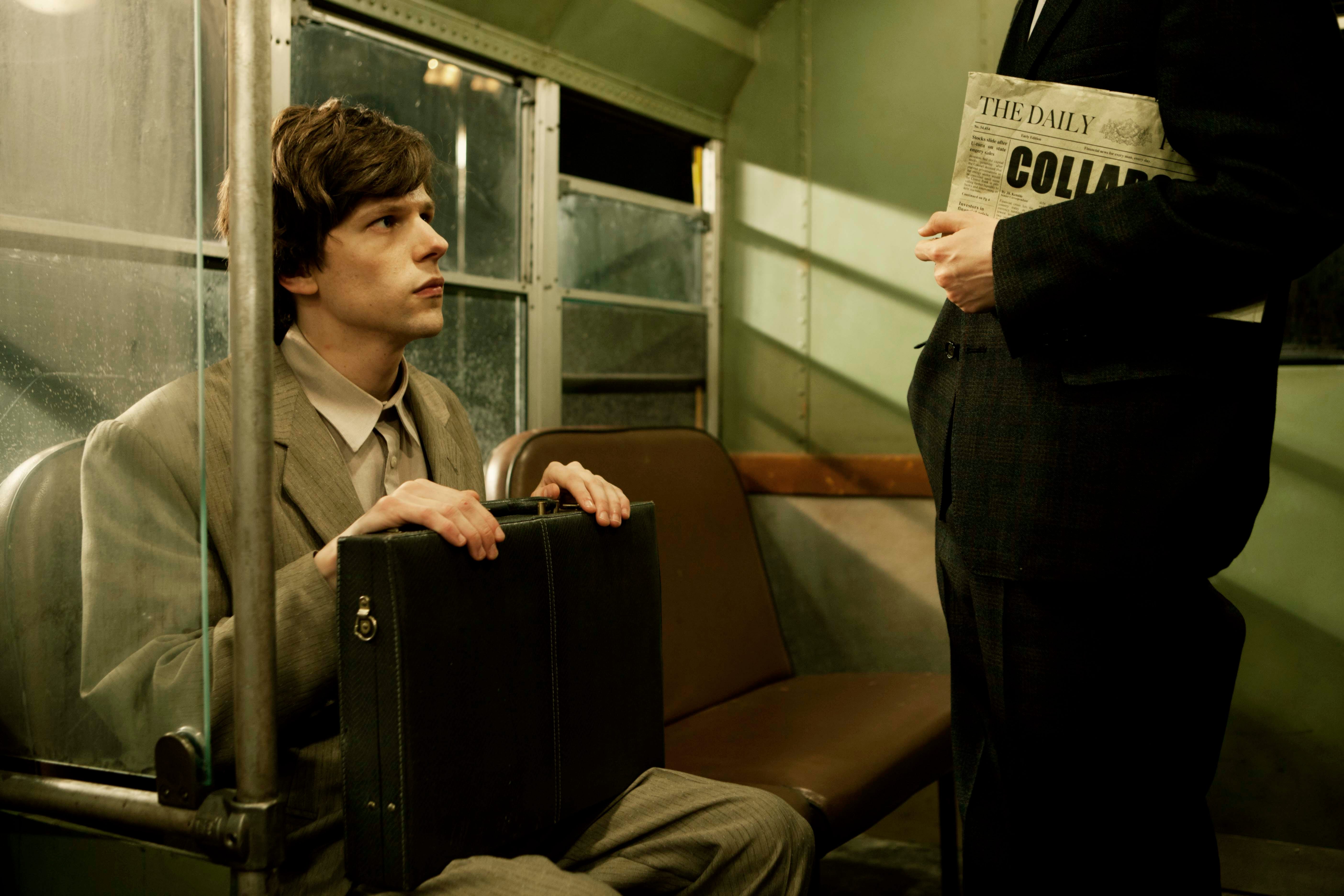
Ayoade is a favorite British comedian of mine, and I’m disappointed that stardom did not come for him stateside. While I was in prison, I read “Ayoade On Top”, an autobiography loaded with false details that is also, simultaneously, a dense analysis of the Gwenyth Paltrow stewardess comedy “A View From The Top”. He brings that sharp comedic observation to “The Double”, which feels like it’s constantly mutating to match the waves and ebbs of Simon’s bedraggled brain as the presence of his own doppelganger gets him even farther away from what is supposed to be a moral compass. Somehow, while becoming a prolific voice actor and occasional TV personality, he hasn’t directed since. “The Double” makes that feel like an obscene oversight of the entire industry.
Incremental change is what we need when we try to change criminal justice, and part of that comes from how we discuss it in the wider public square. So I’m thankful for articles like this one from Paste, spotlighting a performative gesture by the Tennessee governor a few months ago. He opted to grant a pardon to the musician Jelly Roll, who had amassed a full forty stints in jail over his short life but who, to hear everyone say it, has properly rehabilitated himself. Kudos to Jelly Roll, a musician I do not follow, for being able to re-dedicate his life towards something positive and productive after having wasted away in a number of different institutions during his life. There is more to say about Jelly Roll, and not all of it all that complimentary, but it’s irrelevant to this article, which calls out Governor Bill Lee for participating in a charade in pardoning Jelly Roll and wiping his criminal record clean.
Jelly Roll, through his success, has become enough of a star that now he needs Lee far less than Lee needs him. But this is action Lee took in order to burnish his reputation as a defender of the rights for people to rehabilitate after prison, and he’s not helping someone who needs the help, but rather riding the coattails of someone who worked hard to rehabilitate themselves. Jelly Roll was walking red carpets when Lee came to him with this opportunity. Men currently incarcerated in Tennessee, many with considerably less than forty jail terms (which is, admittedly, impressive) need help finding work and maintaining jobs in order to lower a recidivism rate that, in 2021, teetered close to 50%. Granting a pardon to a millionaire does nothing for the men and women lost in the system who need help. And it’s good that publications not normally inclined to write about criminal justice can take the time to point this hypocrisy out.