
She Said
And Cop City

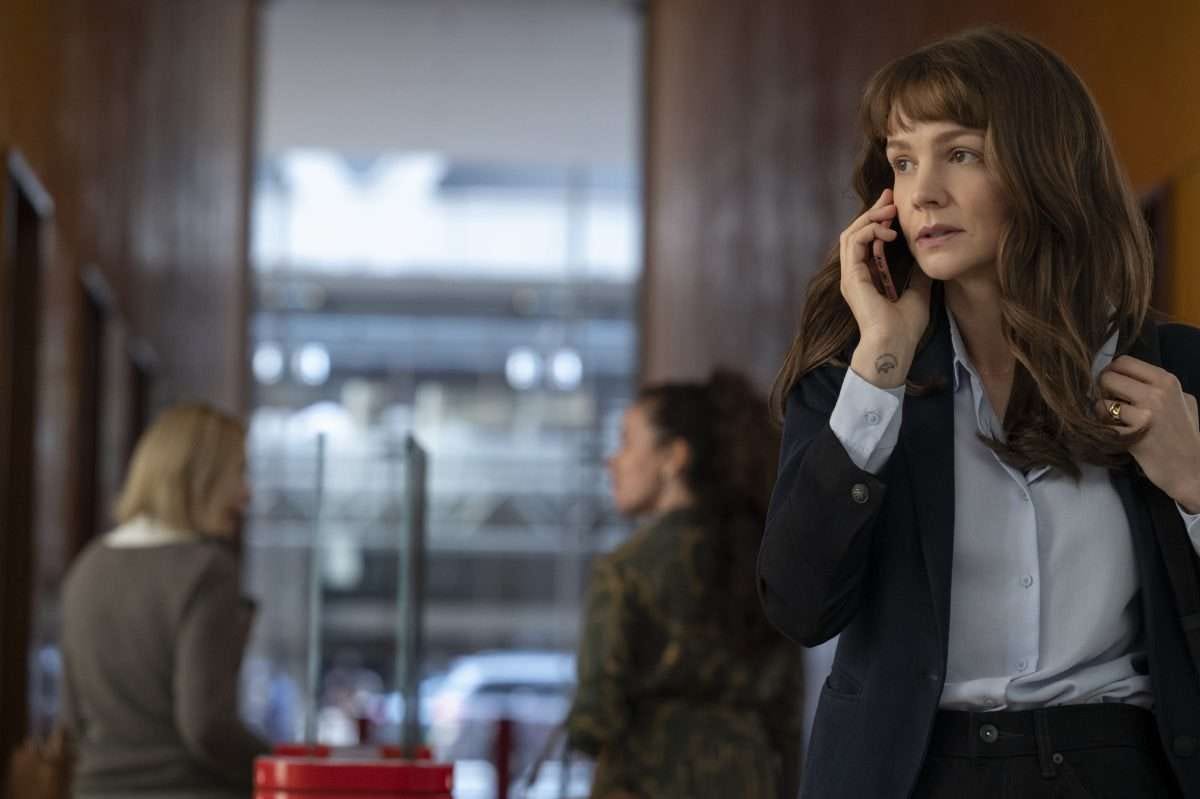
Welcome to BOOKS INTO MOVIES WEEK! I’ve done this before, and the theme is movies that came out between late ‘14-early ‘23 based on books I read in the same period while incarcerated. It seems like a pretty narrow criteria, but look, it’s prison… there’s a lot of time to read books. I would read two or three books a week back then, starting with the generic bestseller crap they had in county and moving up to whatever I could find in the libraries in the feds.
Here are some of the titles I’ve covered on the site that fit this criteria.
Nightmare Alley
Inherent Vice
Professor Marston And The Wonder Women
The Goldfinch
The Disaster Artist
Billy Lynn’s Long Halftime Walk
Cherry
Waiting For The Barbarians
Stars At Noon
I Know This Much Is True
I’m Thinking Of Ending Things
Spiderhead
The Catcher Was A Spy
White Noise
Bel Canto
And this seems like a big topic, but, you know, I was incarcerated when #MeToo happened. I hate being so glib as to reduce a cultural shift to a hashtag, though it is arguable as to whether the moment actually stuck, or if it irreparably divided the genders due to the failure of men to accept the responsibilities of their actions. Sorry, guys, but it’s true. I watched the prison television sets when Harvey Weinstein was first accused of a raft of sexual assaults, and recalled hearing his non-apology apology, where he admitted guilt to very broad transgressions he would not name, and conceded that he would donate to a few charities as penance. Because you know a man has admitted culpability when he’s wondering if a charitable contribution is tax-deductible.
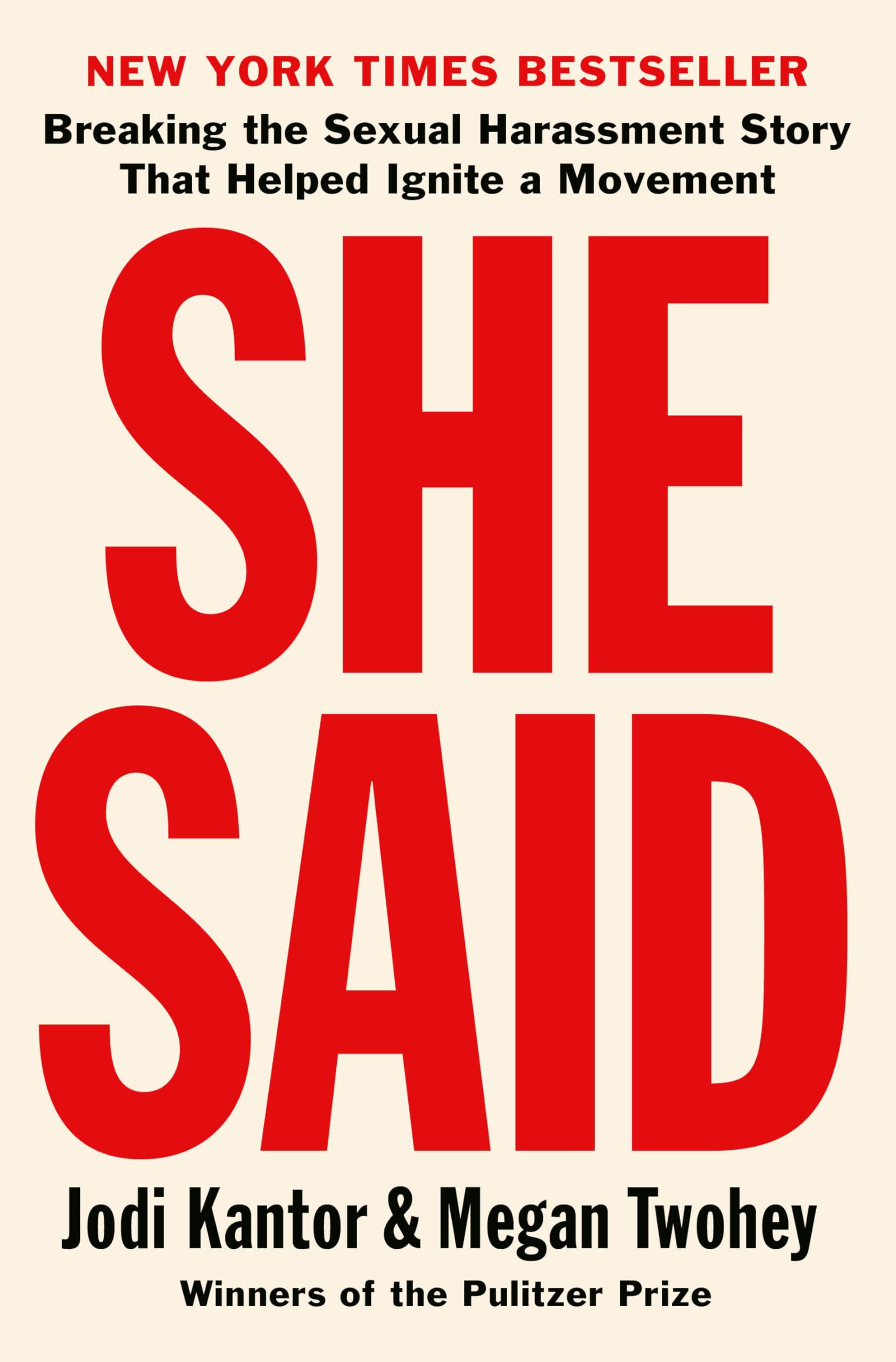
The scandals continued, then the prosecution, and finally, the book. “She Said” was written by Jodi Kantor and Megan Twohey, New York Times reporters who were on the Weinstein beat for the newspaper and who helped build the case. It’s compelling, brisk reading, detailing how one can engage in an investigation when you have editors questioning the gravity of the situation, a subject that is uncooperative and powerful, and unseen third parties with a vested interest in such a story going forward. It reads like a movie. But was it a movie anyone was interested in seeing?
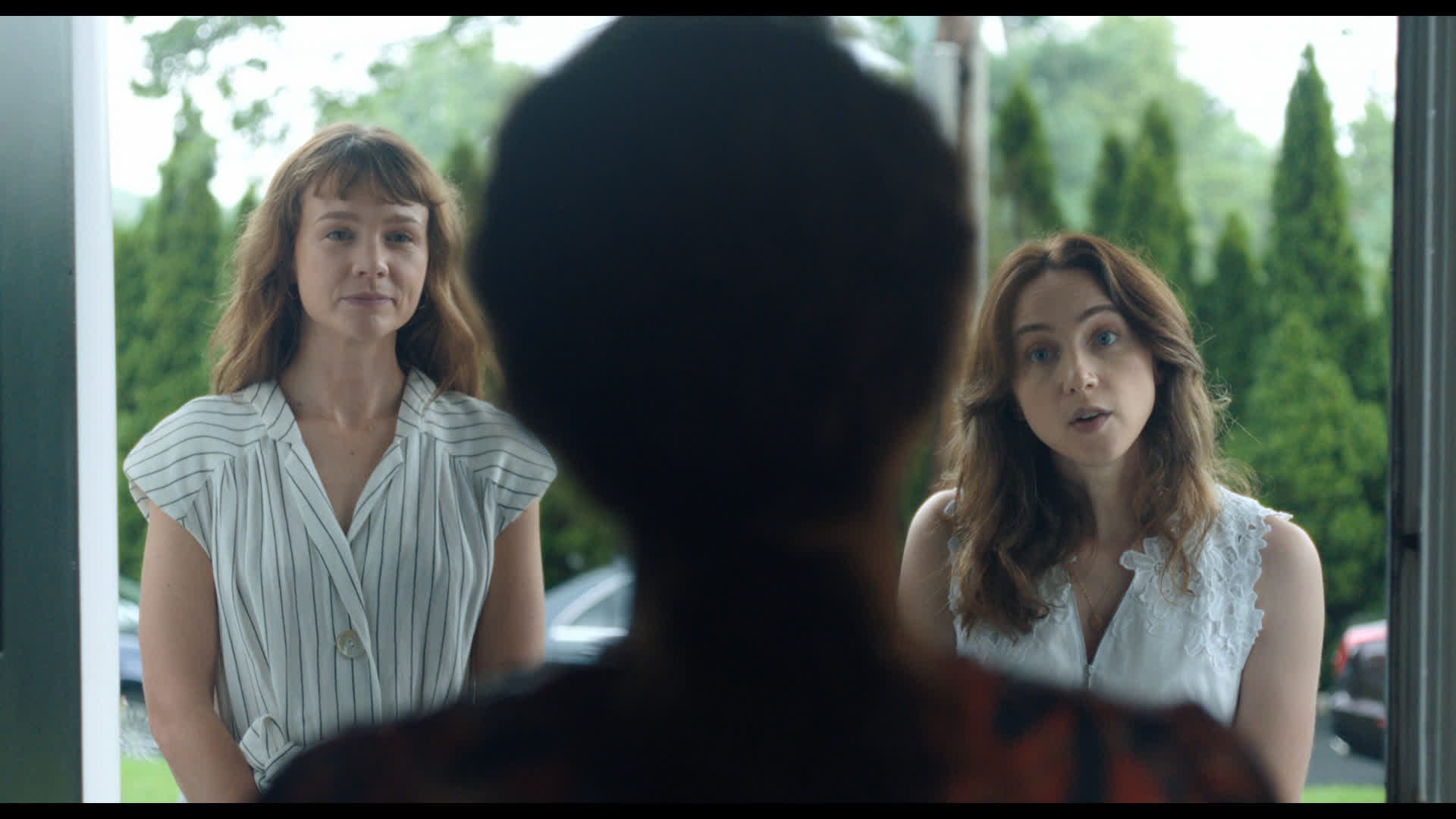
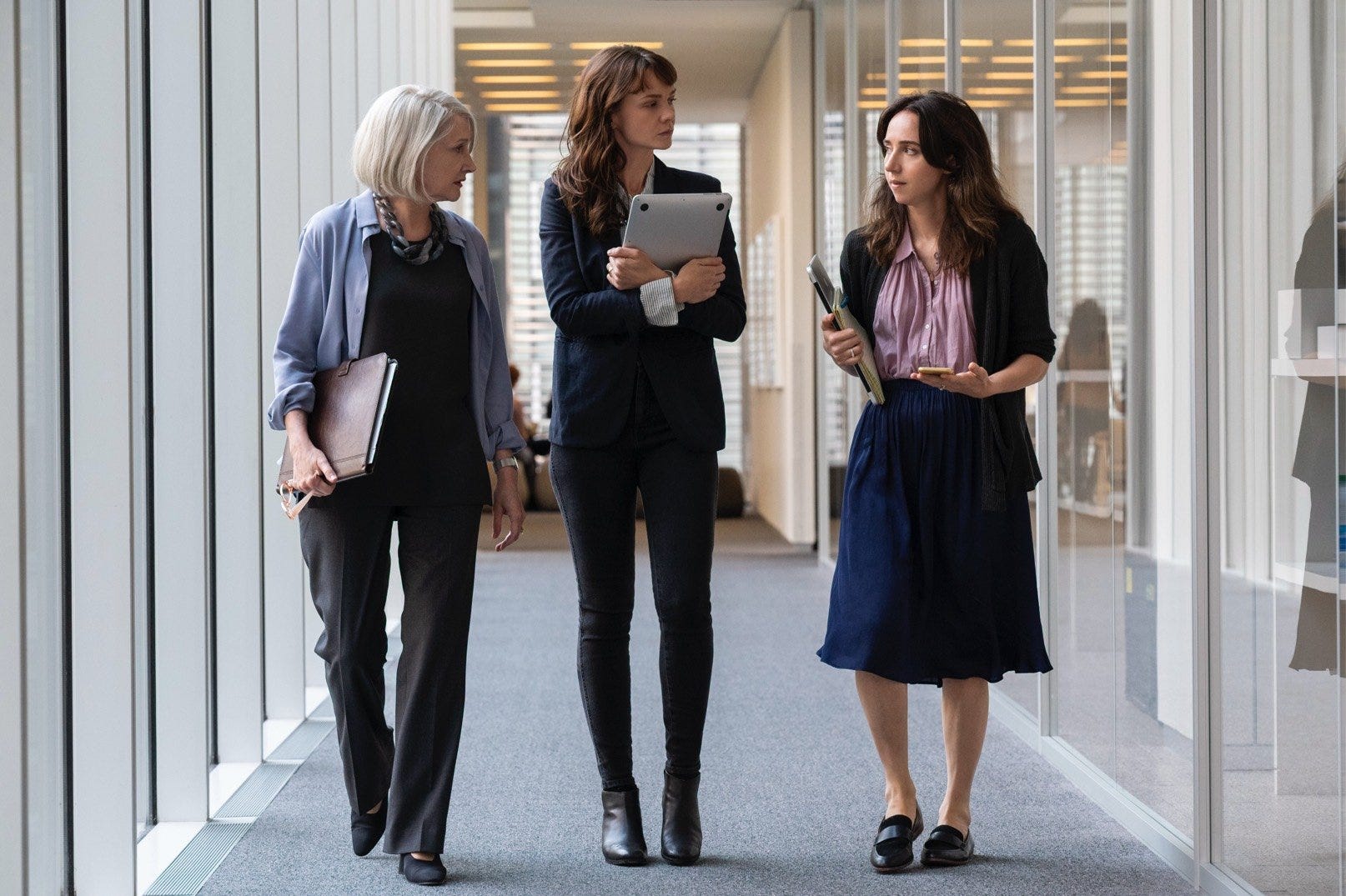
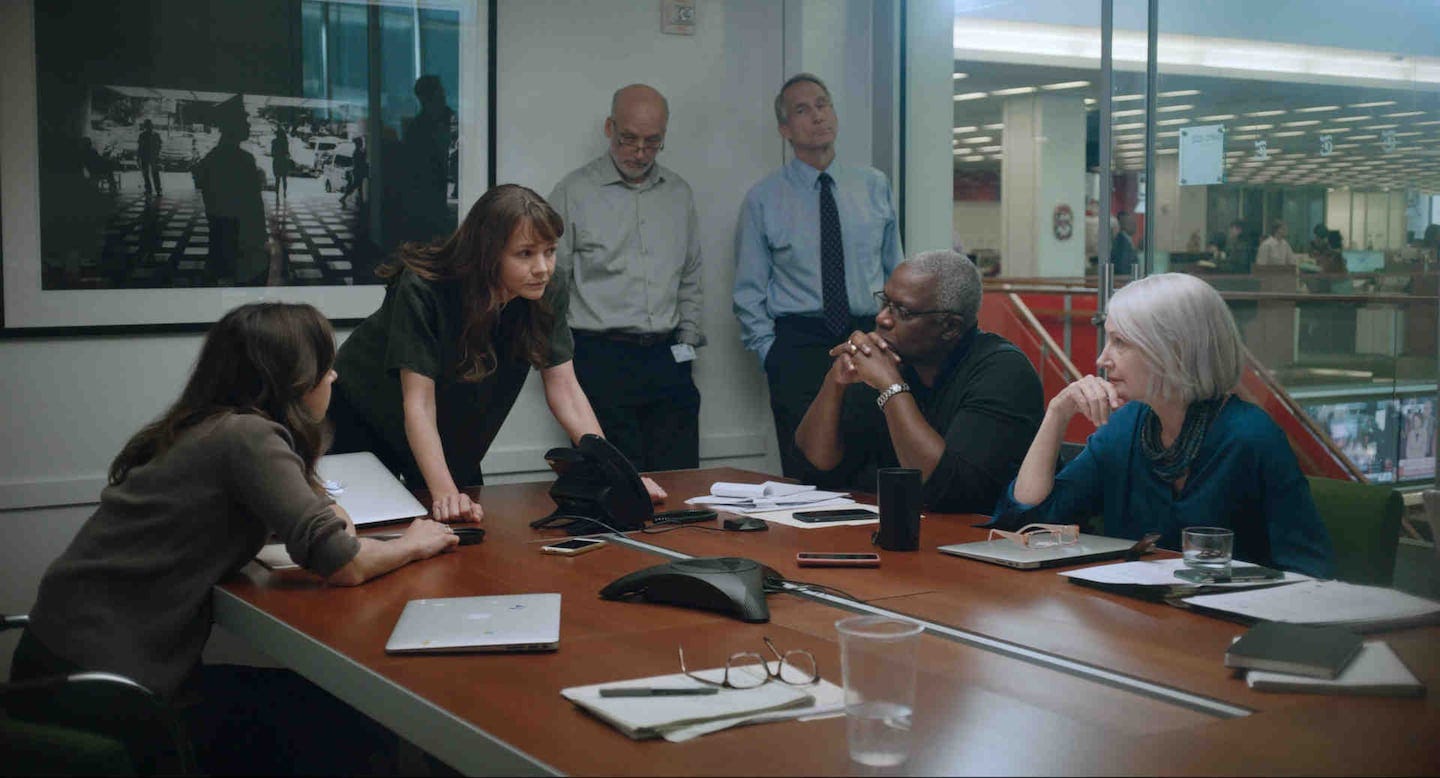
Zoe Kazan and Carey Mulligan star as Kantor and Twohey, who assume it’s just business as usual when Kantor catches wind of a compelling accusation of assault against Weinstein by actress Rose McGowan. When Kantor reaches out, she ends up following a trail of breadcrumbs attaching Weinstein to several other assaults. There is something a little upsetting about some of these actresses playing themselves, the idea that they are representing a historical moment that is still happening by inevitably reliving their trauma. More pointedly, there’s not enough said in the movie to point to the fact that Weinstein sexual allegations go back decades. Having Kantor and Twohey pursue this line of thought as rumor that’s suddenly become fact limits the exposure of the many journalists over the years who have heard and ignored similar stories of Weinstein. Is that a fair critique of this film if none of us can rightfully name those journalists? “She Said”, the book and the movie, never indicts those in the past who suspected what we now know about the disgraced mogul.
Kantor and Twohey begin hitting the pavement to prove or disprove these allegations, confronting a wall of NDA’s. Their discovery works on a macro and a micro level. On a micro level, it means Weinstein had shown some awareness of his actions and the consequences, since he had made costly arrangements ensuring witnesses and victims lacked the motivation to turn on him. On a macro level, it means that, in protecting himself, Weinstein has had a lot of help in fairly high places, people who have consulted him on what to do in situations like that. It also reflects back on that apology I mentioned earlier, which no doubt was vetted by a team of lawyers.

Not only are they journalists, but now they must be snake charmers, trying to trick people into violating their NDA’s, in the hopes they’ll find someone who didn’t sign one. This is one of those moral traps that I wish the film tackled, because through the Weinstein situation, I have since learned of people – men, if not protectors of fragile patriarchy – who believe that an NDA, any NDA, is sacrosanct, and should never be violated, particularly in regards to situations where one’s assault is another’s “aggressive seduction”, or whatever gross term Weinstein would use. It’s the same mentality as Back The Blue, or those who believe the Department Of Corrections needs to be preserved. Basically, I mean the people who believe broken institutions need to be upheld in order to preserve a status quo, because without a status quo, how would anyone without ideas manage? So you can imagine the struggle Kantor and Twohey here have trying to get someone to break an NDA they signed with Weinstein of all people.
It’s difficult to truly evaluate a movie like this, because there’s a complicated dance between journalists who wish to reveal the truth, but also who are mindful of the impact these discoveries will have on their career. This is a serious, principled look at journalists doing their jobs, and Twohey and Kantor are not depicted as heroes. At the same time, it is not entirely honest, because we never really see this ogre they’re investigating. Weinstein is not seen, only heard, forever trapped behind doors, forever threatening from a distance. When he’s on the other line during a conference call, he pulls out all the stops, vacillating between threats, and what he’s always thought was charm. In a bit of foreshadowing, there’s also a scene where we hear Donald Trump, also exposed through extensive reporting from Twohey, though we don’t see him. You can’t necessarily tell that the voice is actually coming from James Austin Johnson, who has been impersonating Trump on “Saturday Night Live”. But knowing that in retrospect does sort of seem like adding insult to injury in depicting Trump, when all you have to do is take him at his gnarled, corrupt, stupid word.
At the same time, it’s surprising to see that the movie does not seriously interrogate Black Cube. In the book, through Twohey and Kantor’s investigations, they uncover information about an intelligence agency called Black Cube, backed by Israeli funding and veterans of Israeli intelligence, According to the book, this reclusive organization was involved in heavily-funded whisper campaigns to tank the reputation of accusers, smear their credibility, and kill stories developed by media sources. It’s a bit spooky that Black Cube is not mentioned in the film – if they are, I missed it, and it was only a minor allusion. Their lack of presence in the film suggests the limitations in dramatizing this, given how Black Cube was notoriously stingy with the public reputation. The idea of Weinstein collaborating with actual Mossad agents seems like an association inviting unnecessary and lucrative lawsuits.
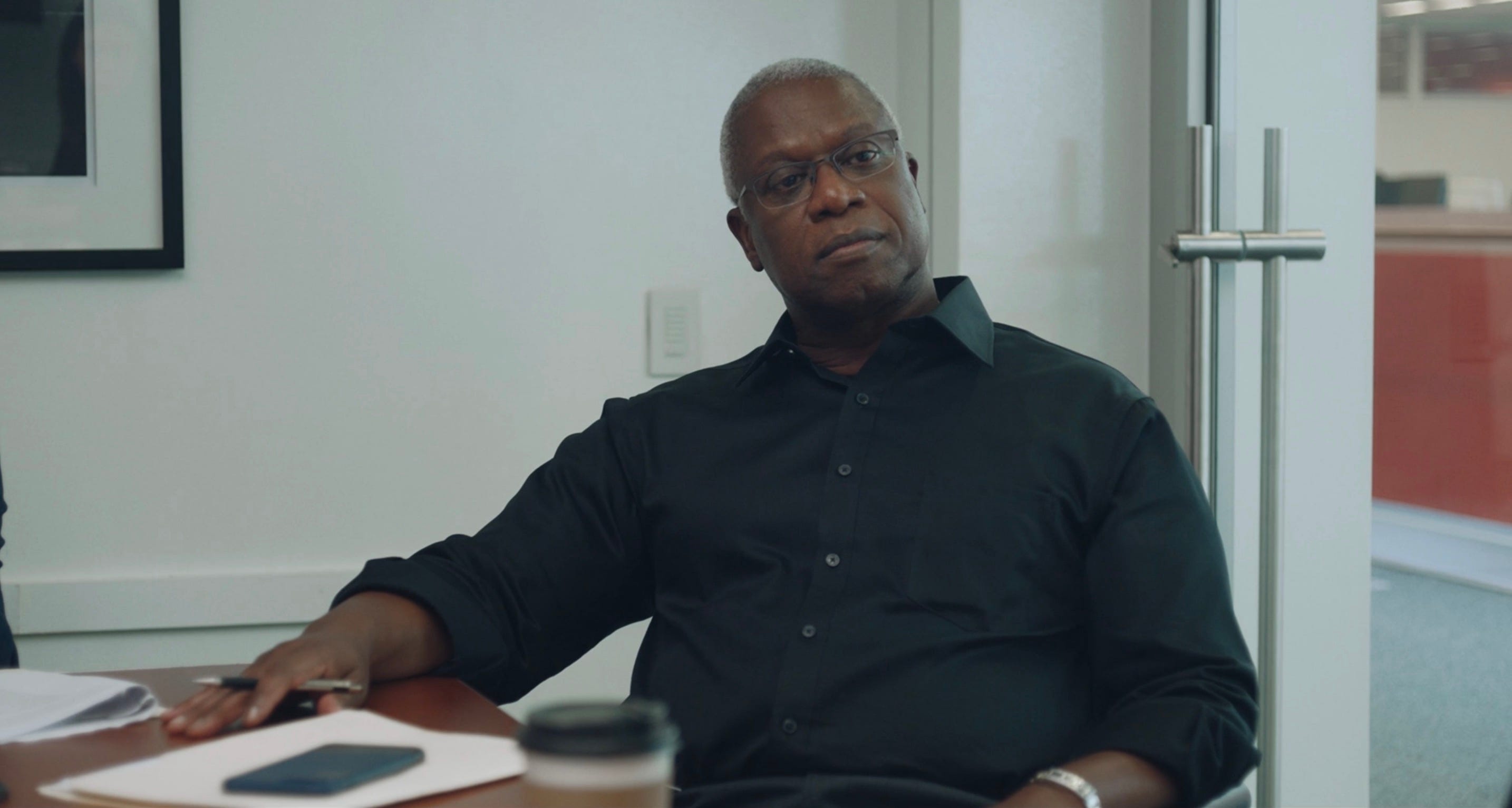
Obviously, a movie like this is made for a very specific audience, one who doesn’t require an explainer. But you wonder how “She Said” plays in twenty years, to audiences completely unaware of what occurred during this era. It already seems like a fossil to the boys who hate #MeToo and think that a recent vote for Trump “defeated woke” – these boys likely feel validated in referencing “She Said”’s frankly miniscule box office take. It’s interesting especially because “She Said” is made in an unfussy, arguably imagination-free style, perfect for allowing for serious performances by the likes of Patricia Clarkson and Andre Braugher as New York Times editors. And yet, we’re talking about Weinstein, unquestionably a major figure in the history of cinema.
Before Twohey and Kantor’s sexual assault investigation, Harvey Weinstein and his brother Bob ran Miramax as “saviors” of independent film. They spent money to buy small films at festivals, and smaller pictures from overseas, and bring them to America. The ad campaigns were expensive, and the awards campaigns even moreso, because they were trying to force audiences who wouldn’t normally see their fare to sample a movie that was somewhat off the beaten path. Harvey was also known to browbeat and berate people into entering business negotiations with him, and it’s arguable as to whether he was even a cinephile – some of the festival acquisitions he made were negotiated in the lobby during the movies’ actual first public screenings. It would have provided intriguing context to reference any of this during the film to provide context as to what kind of empire was threatening people who would expose Harvey Weinstein. It would have also been worth noting that, at the time, the Weinsteins were long gone from Miramax, and a decades-long industry hot streak had ended, with the newly-formed The Weinstein Company losing a considerable amount of money at the time of these investigations. Harvey, in other words, was already on his way down, which may have contributed to the momentum Twohey and Kantor needed to get people to speak on record. Perhaps a conspiracy theory, but perhaps also indicative of exactly how, and under what conditions, wealthy white men are finally held responsible for their abuses. But more reason that, for events like this, I would recommend the book moreso than this, and perhaps any, movie about the same topic.
I am currently located at a place corresponding to my supervised release and a parole officer. But I don’t technically have any real ties, and so I can go anywhere I’d like. I’ve casually looked at a lot of places. But I can tell you that one of the places I will not be going is Atlanta, Georgia. Law enforcement has been experimenting with turning Atlanta into “Cop City”, where A.I. surveillance has been used to track and trace everyone. As of last year, Atlanta has 124 cameras for every 1,000 residents, which is a higher rate than any city in the country, and any city in the world other than a few provinces in China. How did we let this happen? Why is this happening?
Much of this is being driven by gentrification. These coils intertwine so much that you can never tell what is causing what. This is driving up property rates in Atlanta, and surveys have established that every time a region endures a 5% increase in property rates, arrests rise too. At the heart of this is the accepted false wisdom that people use to defend mass surveillance, that you don’t have anything to fear if you’re not breaking the law. How does that work when A.I. is matching your data with the region’s history of law enforcement, fraudulent or otherwise, the history of abuses and mistreatment of the marginalized? Just driving through Atlanta now likely means your license plate has been logged in a comprehensive database. And that database connects you to 2,000 law enforcement agencies all over the country. That’s how you treat someone who is either a criminal, or someone who can fill a certain quota. We shouldn’t have to ask what the nature of these quotas actually is.
I always thought they adapted the wrong Weinstein book- Ronan Farrow's was WAY more cinematic, and a lot more like THE INSIDER, including the journalist's bosses being compromised; there was Black Cube stuff in that book too. But it also did more naming of names of big-time Hollywood and journalism types