
Outrage Coda
And The War Against The Homeless

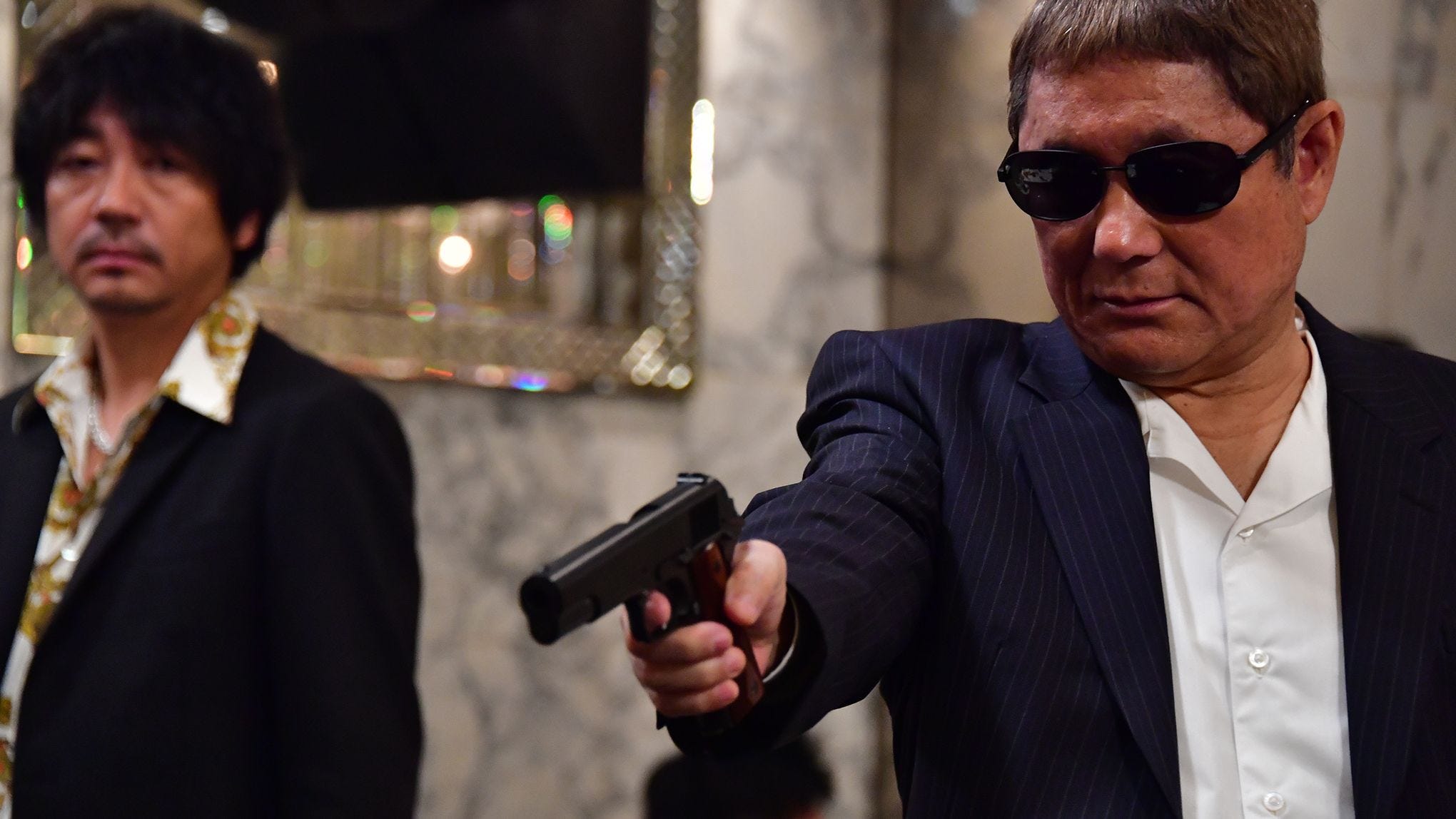
One of my favorite legendary figures of cinema is the unflappably-cool Takeshi Kitano. An oddball comedian in Japan, Kitano emerged from a life-threatening motorscooter accident as a stoic badass director of elegiac crime films. He’s known for embracing a deadpan comedic style in his films, which are otherwise cruel poker-faced occasions, not unlike his acting style. His is bone-dry with a wink, a brief acknowledgement that the act of pretending is nonsense, a sign that the macho archetypes he explores (Yakuza/Cops) have a great deal of value in regards to social commentary, but they are still his playthings as a director.
Kitano has flirted with Hollywood, but not aggressively. When I was in prison, I was delighted that he popped up in the questionable American redo of “Ghost In The Shell”, and equally amused that it seemed he had no interest in speaking any of his lines in a language other than Japanese even as he has complex conversations with English-speaking characters. Kitano has been known to zig and zag – a recent film of his, “Kubi”, has not earned distribution in America because it is a massive big budget war epic that nonetheless features a considerable amount of homosexual activity between characters – Kitano’s subversion is reportedly being based in historical accuracy, though I wonder if that’s the element making buyers gunshy..
“Outrage Coda” is a different beast. This is the third film in the “Outrage” trilogy, which seems to have begun as a commercial concession after a few of Kitano’s curveballs didn’t receive nearly the same stateside attention as his late-nineties highwater mark of “Sonatine” and “Fireworks (Hana-Bi)”. It is still a Kitano film, but it’s classic meat-and-potatoes Yazkua storytelling. Reflecting a dismissive attitude towards the genre, both 2010’s “Outrage” and 2012’s “Beyond Outrage” seem to contradict their own key plot points at times, genre exercises moreso than fulfilling narratives. It took a couple of years before the man often known as Beat Takeshi returned with “Outrage Coda”, the years in between trying to ward off what felt like a compromise, given how in earlier comedies, Kitano has expressed an exhaustion with the genre.
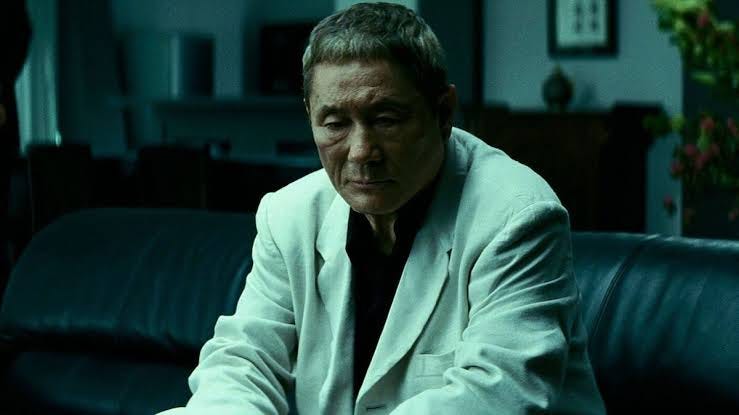
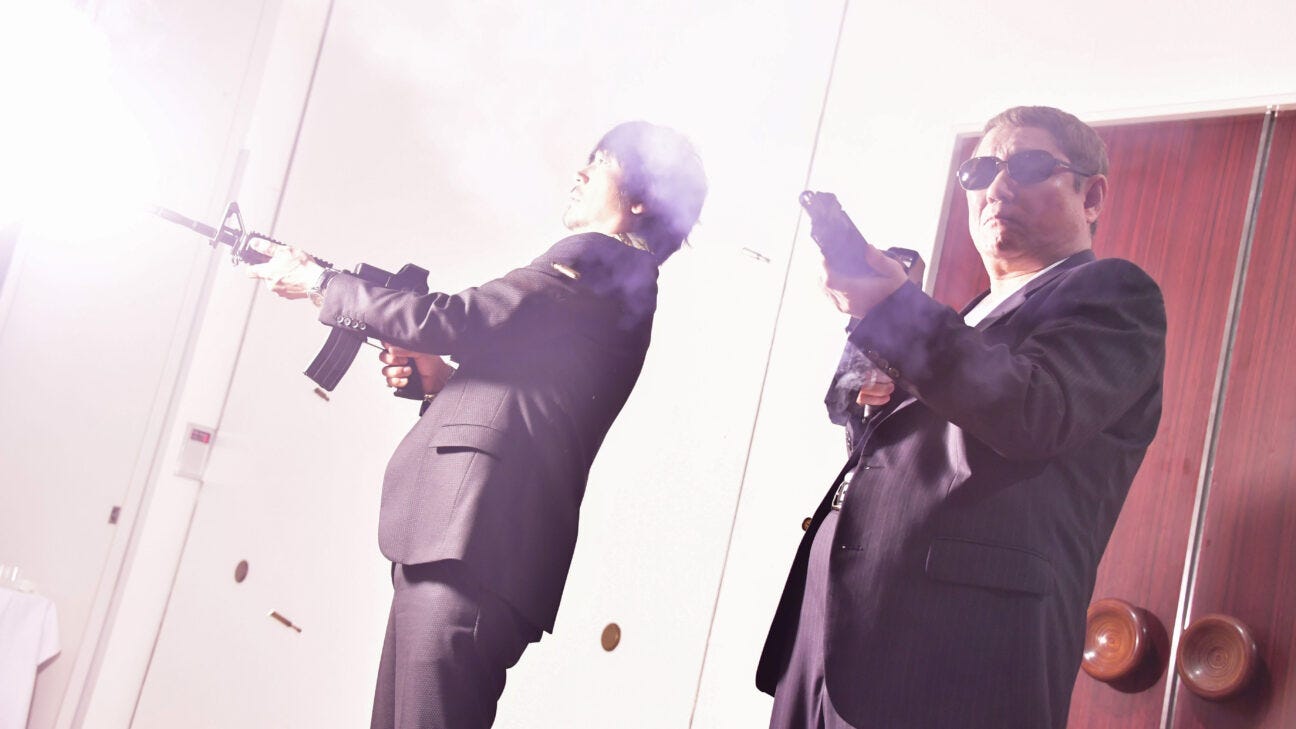
His gangster Otomo survived a prison stabbing in “Outrage” and a collapse of crime families in “Beyond Outrage”. Now, he’s still working with the syndicate through advancing age, frustrated by broken connections and confused interactions. This manifests in an ugly situation involving prostitutes and an errant death, one where a crime boss has to be lectured by Otomo and his men about his own abusive extracurriculars. To Otomo, it’s a simple problem. He’s not exactly a protector of women so much as he’s a believer in protocol.
This is a movie about small gestures and misinterpreted motives. Otomo wants this misogynist goon to make up for his actions. He does not necessarily feel that the man is disrespectful, but rather that the man is then intimidated so easily to pay for his mistake. Otomo then becomes a go-between as these gang representatives, gritting his teeth as he negotiates what used to go without saying. Kitano’s characters frequently act out against fading traditions, though what’s interesting is that much of his Outrage is extended to the people of his own generation, the ones who ostensibly should be upset over the changing aesthetics but are actually making allowances for the fading of propriety. In doing so, Kitano explores the hypocrisy of his own characters, whose traditions are usually based on solving problems with bullets.
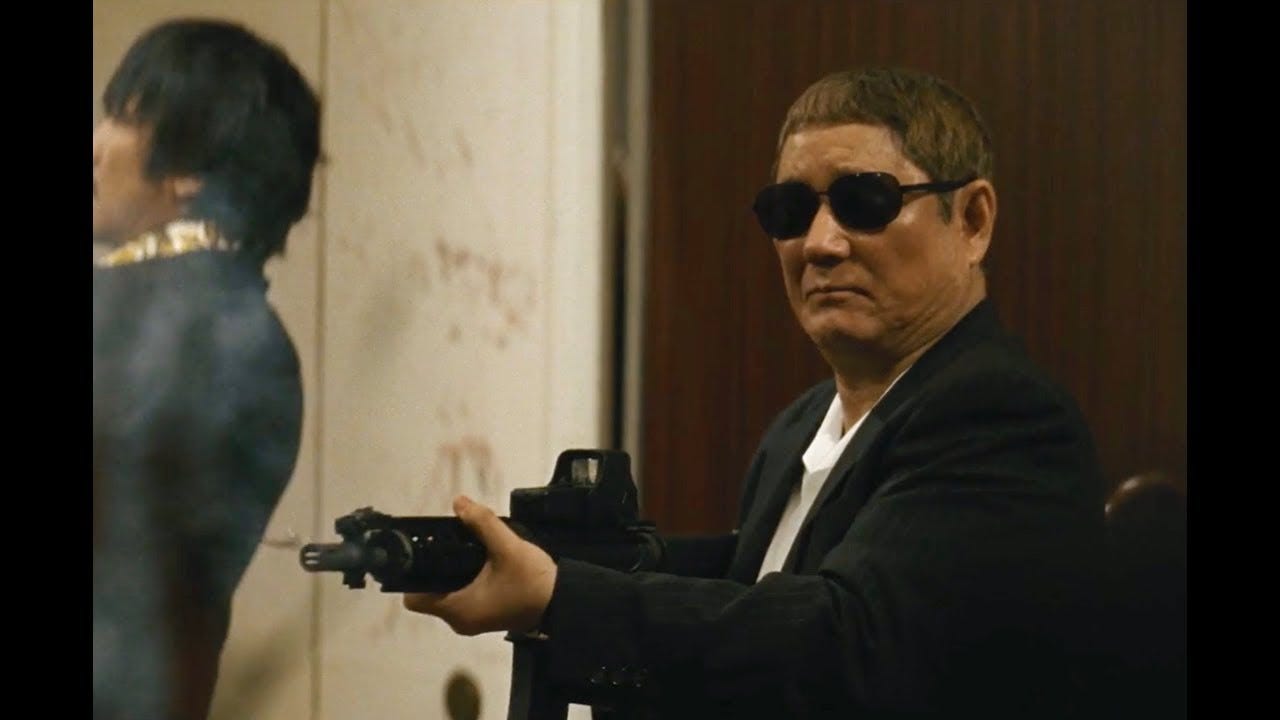
A pet theme of Kitano is toxic masculinity, something that ran through his earlier films geared towards puncturing Yakuza myths. Here, that’s brought to the forefront of Kitano’s storytelling as a pivotal plot point. Kitano isn’t happy, but this is hardly a guilt-trip screed. No, Otomo’s own frustrations bubble over as gang tension increases and eventually bodies begin to collect. Kitano has his showmanship instincts intact. This is the final of the “Outrage” movies, and he wanted this series to go down in flames and a hail of gunfire. There’s a couple of seedy violent moments that recall the nastiness of Italian poliziotteschi, as Kitano backloads this effort with an excessive amount of bloodshed.
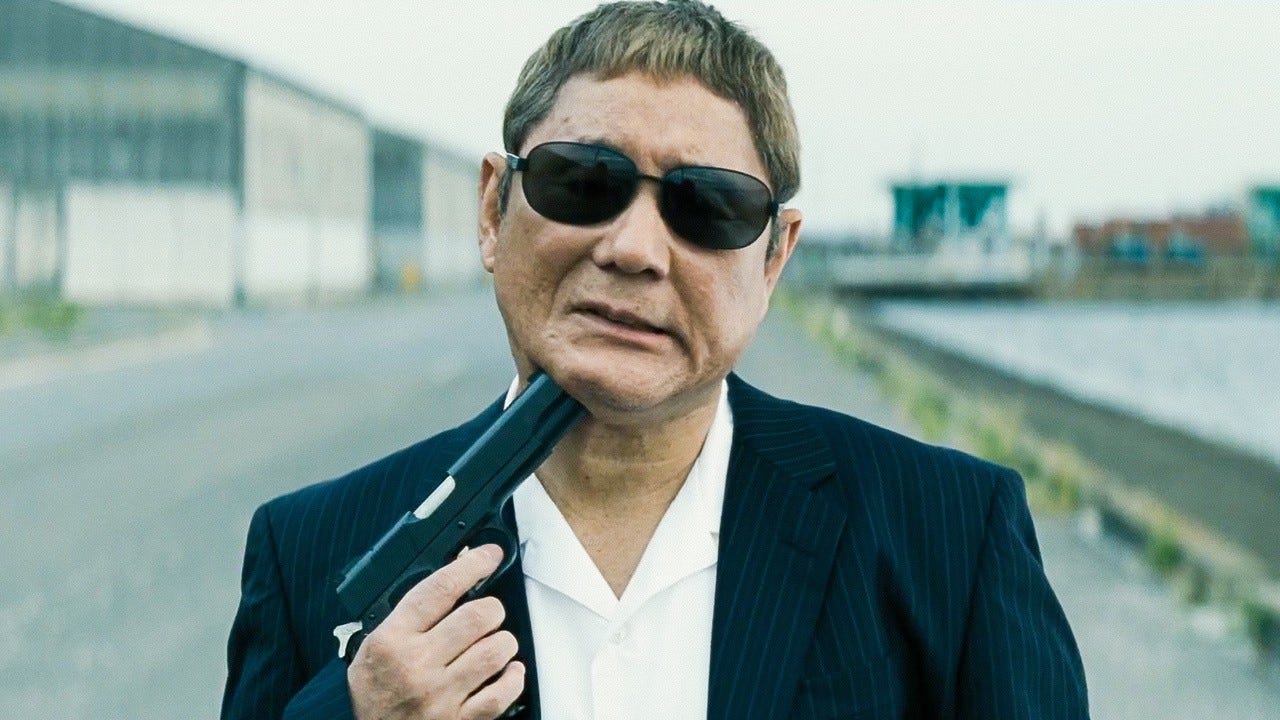
Otomo, as always, is not let off the hook. His adherence to Yakuza law is unbending, and it means that there’s a reckoning that he accepts, a consequence to his own actions. Which, of course, is also alien to others around him, the idea that one’s virtue may result in dishonor and consequence. It results in a bit of dark comedy from the premise, the idea that there is no ideal outcome and that Otomo, as he has before, is determined to dive into a pit in order to restore order, a self-sacrifice that no one at all thinks is necessary. Paradoxically, it’s this will to die that has kept him alive through this bloody trilogy. You wonder how much Kitano, in how bleakly unhappy he seems in all of his films, believes that of himself. He is 78 years old. It’s alleged that the damage done by that motorscooter may have been self-inflected. You see his movies, and you wonder what’s changed. Whatever happens, thank you for everything, Beat Takeshi.
In prison, you don’t see a lot of rich people. There are some white collar guys, but many of them have already blown through their money. Most people come from hard times, and they’re going back to hard times. Much of this stems from the resources the government places towards arresting and prosecuting people in low-income environments and economies. But it also comes from a natural social slant the public has towards the upper class. The idea is that the unhoused deserve to be reprimanded for their social status, but when we talk about the wealthy, it’s considered a dirty word. “Socialism”. “Class warfare”. The idea that the rich can buy their way out of an indictment has gone from a cynical take to accepted fact.
When asked, the public won’t have the same knee-jerk reaction towards the unhoused as they would towards those convicted of a crime. But they have the same desires, which are that they want them out of sight, out of mind. In fact, the roots of treatment are similar for both. No one wants to address the cause of criminality, just as no one wants to observe why people might end up without a roof. They just wish to sweep streets clean. This is not about quality of life. This is about treating people, and a problem, like trash that has to be brushed to the side. I say this as, yes, part of the trash swept to the side. There will be more. Notable is that this is an excellent opportunity for a company to pursue profits. Never let a crisis go to waste.
Because this is transparently not about quality of life issues, we can understand that this is more about dividing one class of people from the others (in almost all cases, it’s wealthy white people, and everybody else). For one, this is about the philosophy behind treating unfortunate humans as less-than, a dehumanization that has been going on for a long time, and is something that troubles very few actual Americans. But for another, people need to understand this is an exercise in power, to see how many people can be marginalized before “regular people” can notice. And when we ignore the fate of 200,000 people simply because they are on the margins of society, we forget that it’s a dry run. That’s happening to the unhoused just as it’s happening to those committing a crime, just as it’s happening to anyone who looks or even smells like an undocumented Latino. It’s a trial run for the remaining people who the government will see are “in the way”. Speak up now. Next time, you might not have a chance.
Love all of Takeshi’s yakuza movies, this trilogy is fascinating, taken as a whole