
Native Son
And How Prisons Treat People Who Aren't In Prison

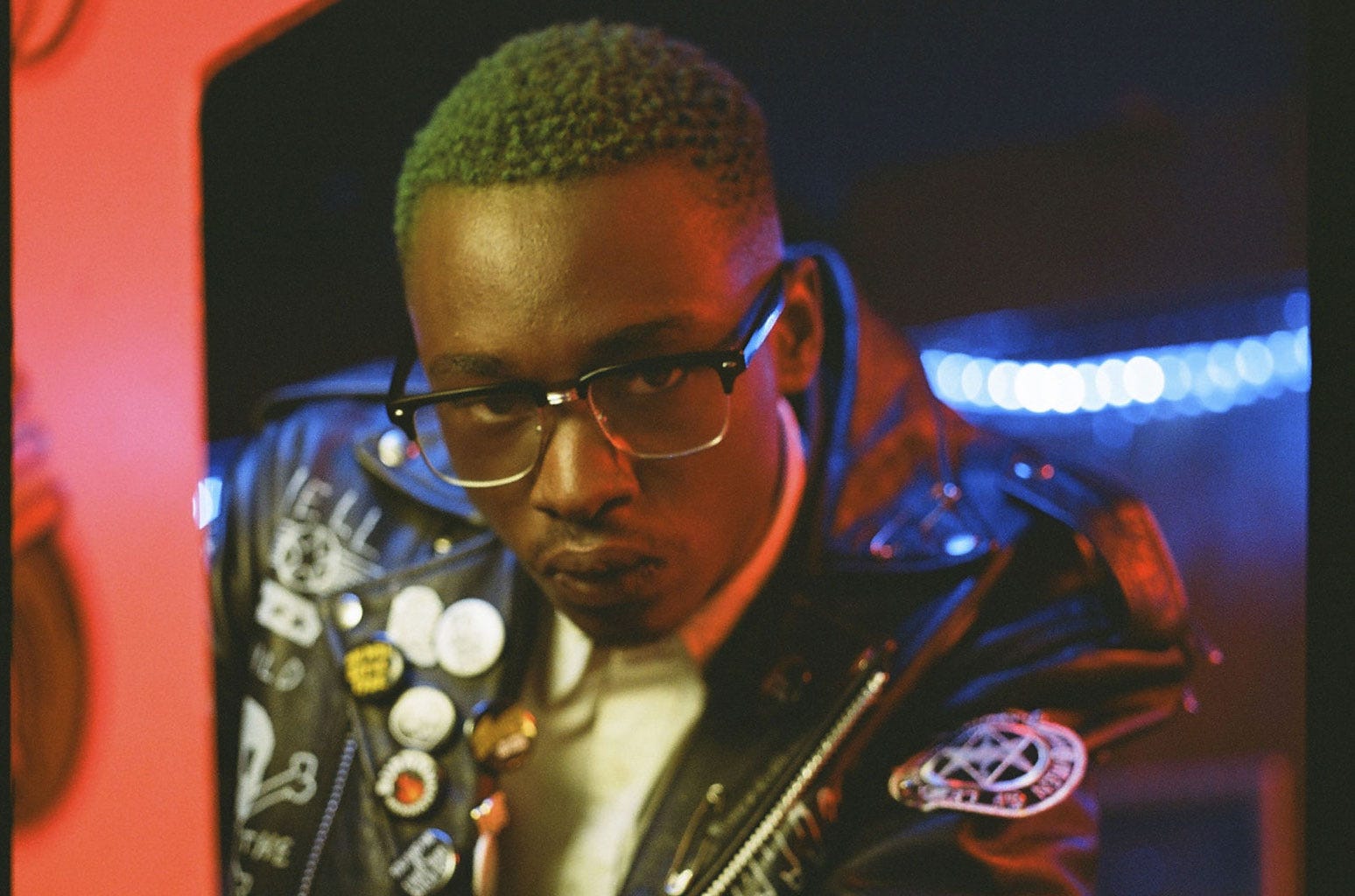
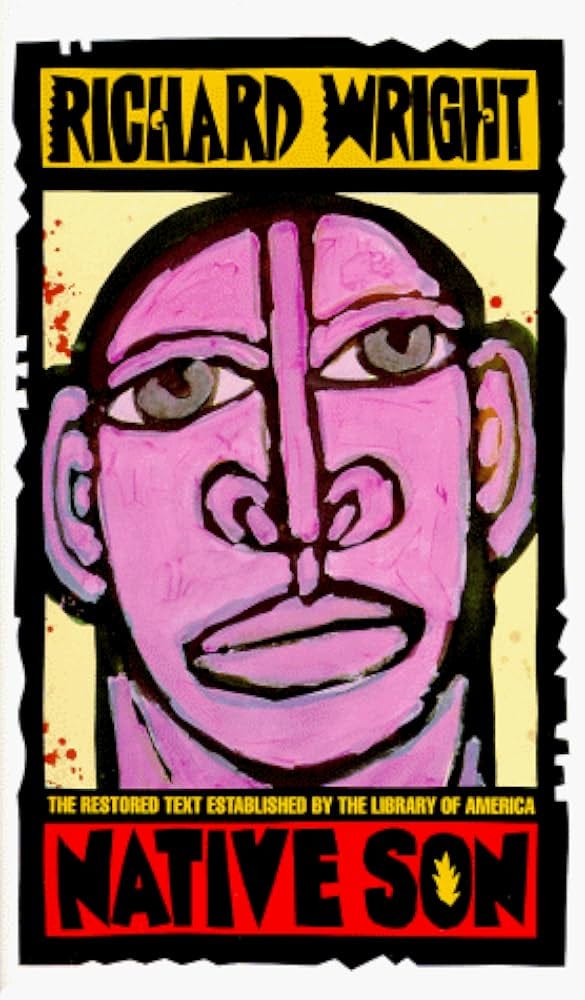
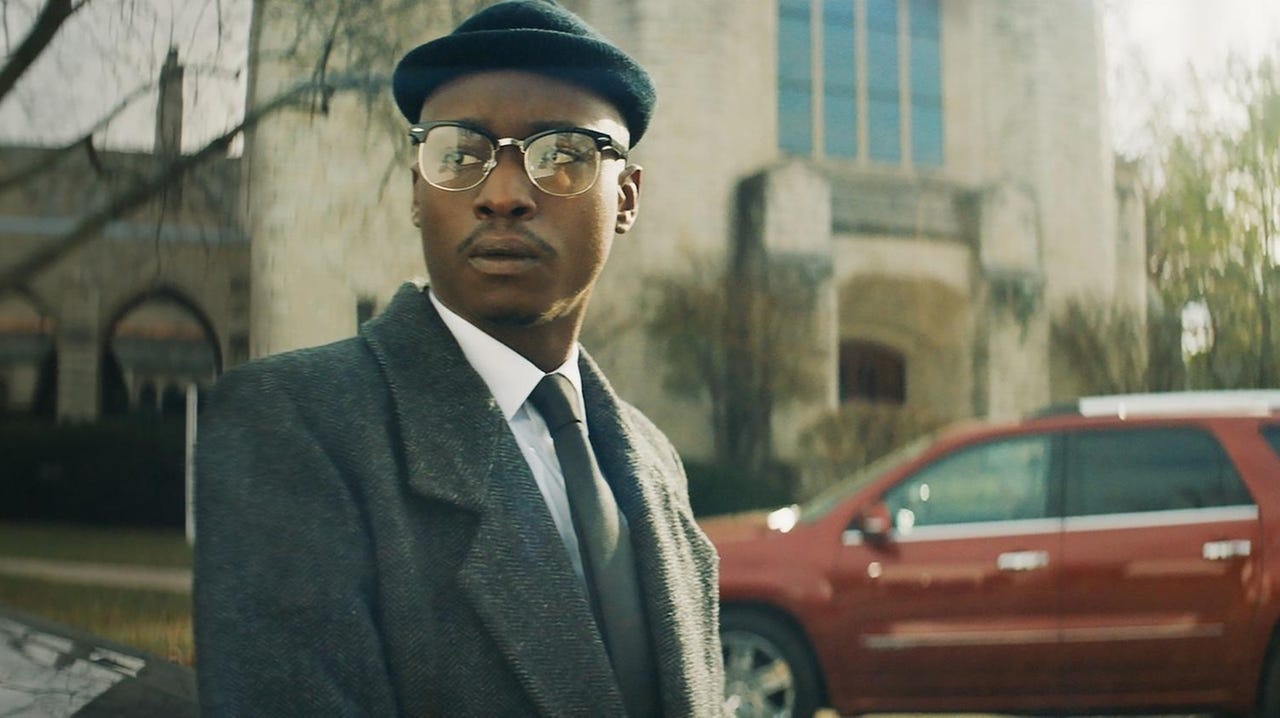
One of the first things you notice about Rashid Johnson’s adaptation of Richard Wright’s seminal novel “Native Son” is the lead character, Bigger Thomas. I feel like people reading the novel perceive the stereotype: Bigger as the large young African-American man, husky, thick shouldered, ready for a fight. You imagine he has the visage of a muscled man, which makes him inscrutable to the white characters who either misinterpret or openly ignore his resolve and intellect. As you read the book you become aware of the characters sensitivities. But you also interpret his physicality as being seen as a weapon to the white people who think he’s dangerous.
This adaptation strikes a different tone immediately courtesy of lead Ashton Sanders. Though this version now takes place in modern day, Bigger is an anachronism. His hair is dyed, bright colors, loud, a bold choice for a young man in search of a job. He wears glasses, though they seem like the type that have long gone out of style, a purposeful gesture. And his fashion sense is pure 1970’s punk rock, gnarled skinny jeans and spiked leather jackets. The book traded in the accepted notion of a Black man as a fearsome physical presence in public. But this Bigger is more of an enigma. The book showcases him as instinctive but under-educated. This Bigger reads Ralph Ellison.
The narrative is superficially the same. Bigger is recruited to an exclusive job, as a live-in private driver to the Dalton family. Henry Dalton (Bill Camp), the family’s wealthy patriarch, seems forthcoming, but it’s impossible to avoid catching his jaundiced eye as he gives Bigger extended scrutiny. Bigger is a green-haired investment, and Dalton is reluctant to invite this new man into the family. Camp plays alongside Elizabeth Marvel in this film as Mrs. Dalton – in real life, the two actors are married, which is an irrelevant but cute touch. It’s nice to see that with two unassuming character actors as opposed to superstars who take the oxygen out of the room when they’re together onscreen.
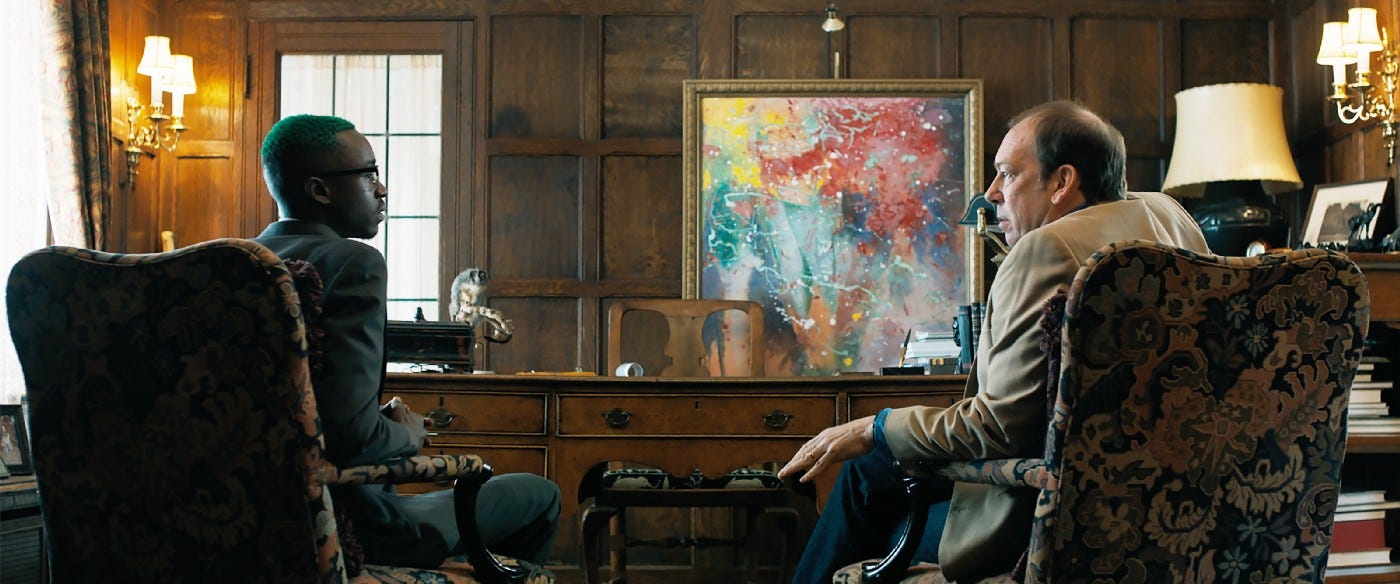
Bigger ends up driving around flirty family daughter Mary Dalton. The extremely-busy Margaret Qualley plays this character as a troublemaker, a young woman with enough privilege to escape any consequence. She openly flirts, and he clenches in response, and this doesn’t at all limit the flirtation. Mary is dating another boy from high society, the preppy Jan (Nick Robinson). The two of them look like autocrats-to-be, but both have modern liberal politics, Jan giving a fiery speech in which he extols Bernie Bros.-level virtues. It’s clear the Daltons tolerate this from Mary because a young woman needs a little rebellion in her life. Mary and Jan are tourists in the realm of the progressive. Bigger can see clearly that it’s easy to fight the Man when you go home to sleep comfortably under the Man’s roof. This movie was released in 2019, old enough that they could still reference Occupy Wall Street as a fresh idea. But the concept of white progressives who are enthusiastic unless an idea requires sacrifice from the ruling class remains within the left today. Mary fits right in.
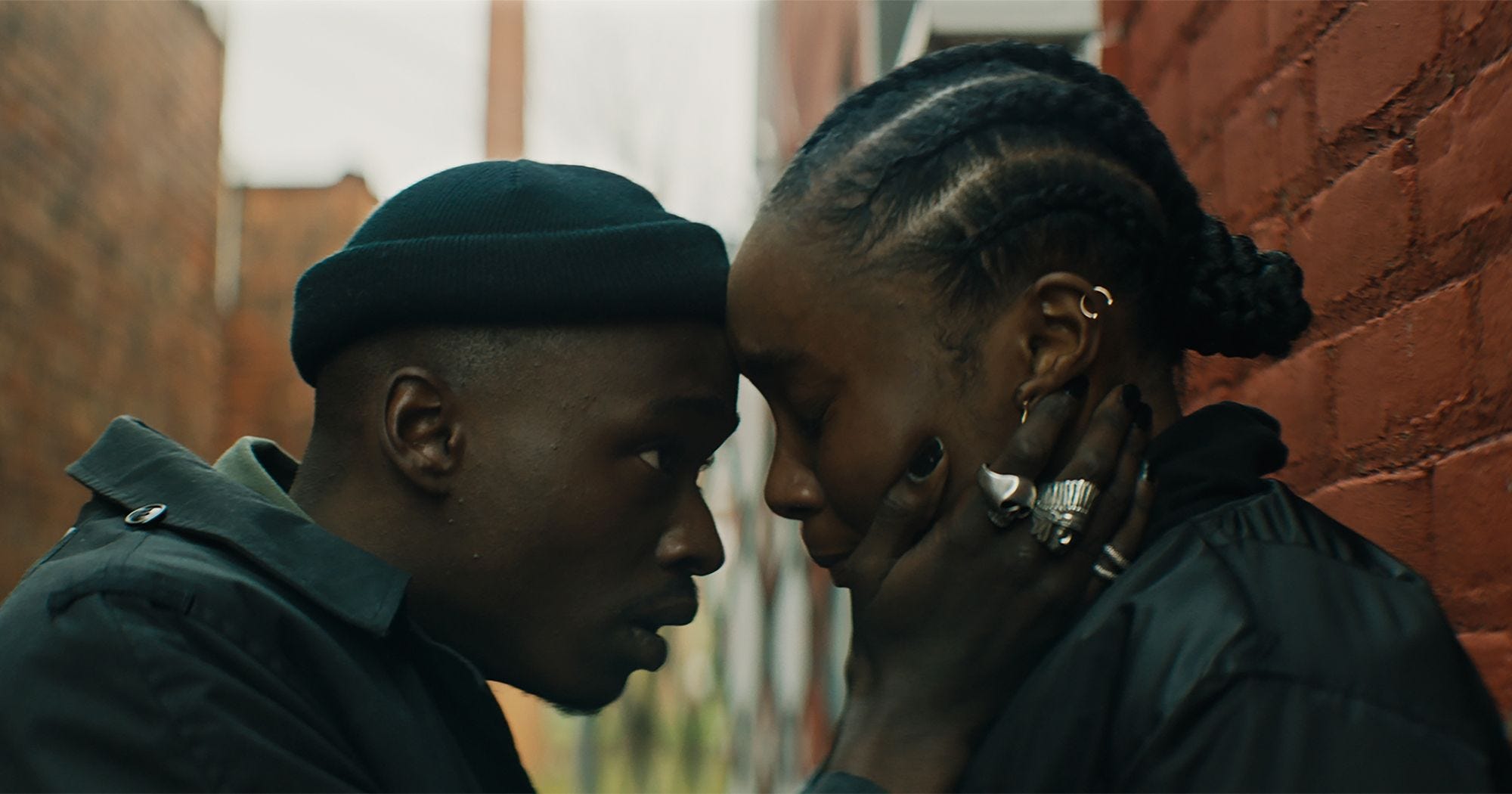
It becomes a push and pull for Bigger, who embraces this lucrative new job even though he has a friend, Jack (Lamar Johnson) who needs his manpower for a robbery. But as it was in the fifties, this is a lose-lose proposition for Bigger. Mary is fascinated by him – unlike the stereotype of the book, the oversexualized Black man, this Bigger is more sexually fluid, he seems more precise, daintier. He has a girlfriend (the luminous Kiki Layne, underutilized) though his features are soft, androgynous. Mary sees this as an element worth manipulating, likely the same way she perceives most social interactions with new people. And so one night, she flirts and yells and ingests drugs in a way that very explicitly makes Bigger’s job harder. This part, for any of you who recall the book, remains the same.
Maybe it’s because this one powerful fool never leaves my thoughts, but my mind turned to a recent event. It was a party held by the current President at Mar-A-Lago, on the eve of massive cuts scheduled for various social programs all over the country. The event was referred to as “A Little Party Never Killed Nobody”, a brazen and vulgar way to celebrate this particular group of ghouls as they took a hacksaw to various economic safety nets for the needy. But it was also a naked show of privilege. For one, the sentiment is purely dedicated to wealthy white people who are isolated from their own actions – a little party HAS killed people, though it’s usually the marginalized who pay the price for the extravagance of white entitlement. And second, of course, is that it was a party with the theme of “The Great Gatsby”, where a little party most certainly killed someone, and yes, it was a wealthy white person. Of course, can you see anyone in this administration ever reading “The Great Gatsby”? Never mind Richard Wright’s “Native Son” – holding that book up to them would be greeted like sunlight to Nosferatu.
Anyway, Bigger’s problems only get compounded from there. The decisions he makes, similar to the ones he does in the book, perhaps don’t hold up to scrutiny in a modern setting with DNA and forensic research. Nonetheless, the walls close in on Bigger, and we feel his frustration, knowing that he “blew it.” The choices made here are saddening – Bigger is given more agency, he makes smarter decisions, and ultimately, he doesn’t commit some of the sins present in the original book. They’ve made him wiser, less complicit in his downfall. And yet, the downfall must remain. The movie’s naked acknowledgement is that progress has been made, but almost entirely by the Black community alone. The suspicion and distrust towards them remains, perhaps it always remains. And so Bigger, who transgresses considerably in the book, here is a stranger, more colorful person. He pays the price for that. The Bigger in the book perhaps became a more palatable creation for white America. But a Bigger that chooses, and carefully crafts, his own individual identity? There is no place for that in today’s America.
I want to remind people that every right that an inmate in prison has, every moment where they are treated like a human being, is something people have fought for – if people didn’t stand up on behalf of inmates, they’d be dying behind bars in prison, and guards would simply sweep up the remains and fill the bunk with someone new. Last year, legislation had to be introduced in Congress to ensure the Bureau of Prisons was contacting family in the event of declining health of their loved one in custody. Previously, there was zero obligation for staff to reach out to the family when an inmate died. I knew this when I was in. I knew that if I ever took a knife to the gut and bled out, it would be a very long time before anyone on the outside would have found out.
Amusingly, this article details a misadventure of Senator Mike Lee. Not my favorite person, Lee has a questionable track record, to say the least. But when a constituent reached out to him about their loved one in custody not reaching out for a certain period of time, he took responsible action and reached out to the prison. He claims they not only provided no information about the man, but they also cursed Senator Lee out. Which is something I would do to Lee, by the way, but for entirely different reasons, and not when someone’s life is on the line. Of course, the official explanation from the prison is, essentially, “Who? Us? Never! We’ve dealt with the problem!” when it’s clearly, from my experience, a system-wide issue and not a perceived lapse. Because of this, every man in custody knows that they have to be prepared if they get hurt, or get killed, that there’s no apparatus in place to notify their spouse, their parents. Their kids. The B.O.P. had to be told by Congress that this was a problem. Tells you a lot about the respect they have for the people they’re holding captive.