
Licorice Pizza
And They Are Not Providing Medical Care For ICE Detainees

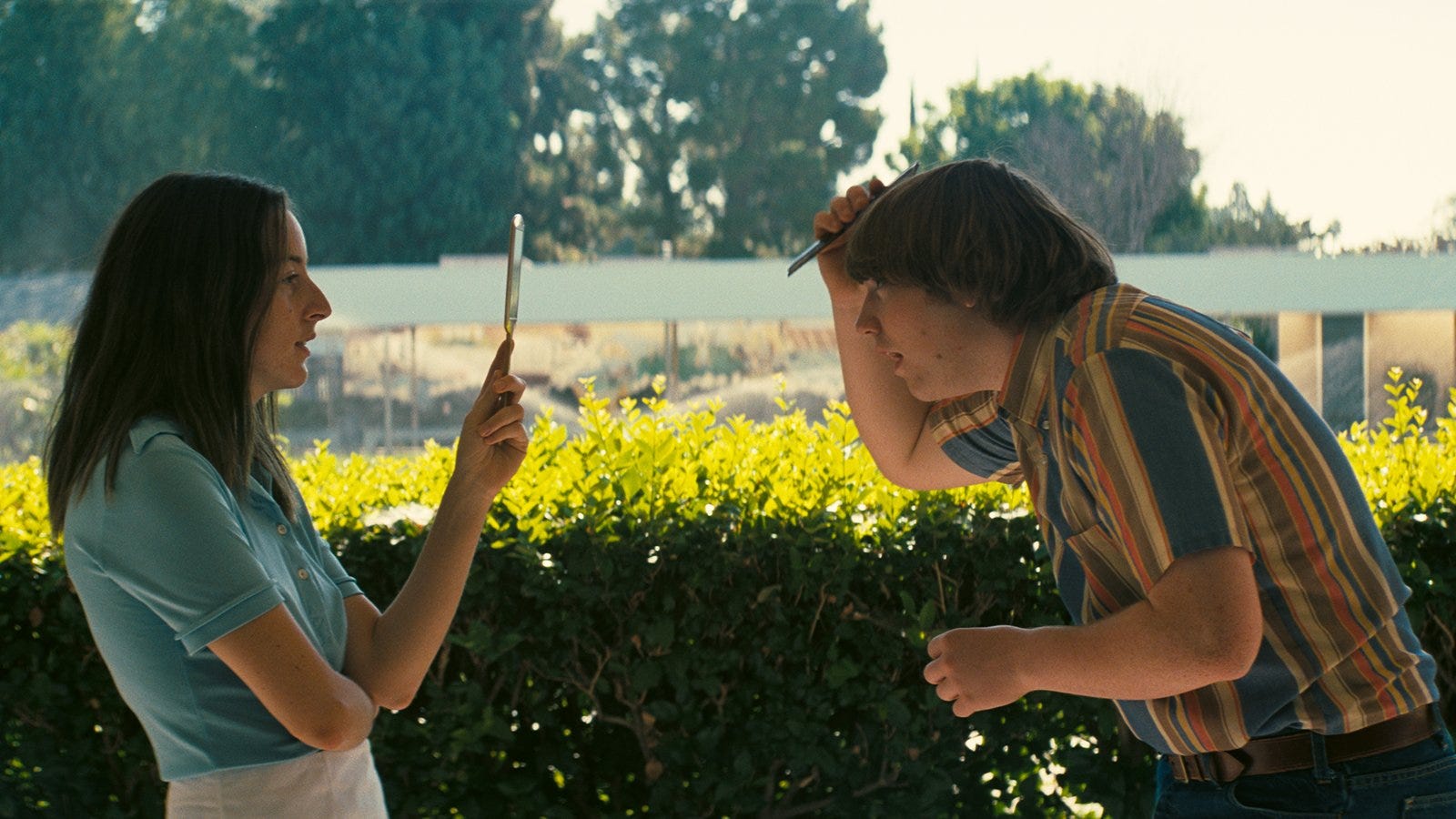
Welcome to a week of Oscar Hopefuls! For the next five days, we’ll be looking at earlier works from filmmakers who are in the awards discussion this year. And we’ll start with Paul Thomas Anderson, who is expected to receive attention for “One Battle After Another”, an early Oscar frontrunner. Anderson is no stranger to awards – “Licorice Pizza” was nominated for Best Picture at the Academy Awards a few years back. It still feels like something of an anomaly however, a movie released to complete indifference from the audience, still lost in that COVID haze.
This is… a romance. Maybe it’s a way of sidestepping the moral implications to some, but it feels like a romance between feelings, a romance for a time. “Licorice Pizza” establishes it’s tone almost immediately, when a harried young adult woman speeding through a high school is intercepted by a student. The girl is Alana, in and out of the narrative, we know her from Haim. The boy, a twinkle in his eye, is Gary – we recognize the actor because his late father was the best in the world. Alana is scattershot, harried, bothered. She is 25 going on 25. And Gary is in pursuit – in life, in the professional world. Now, he’s chasing Alana. She’s waiting on an answer from the world. He’s desperate to be it.
They duel, they parry. He’s wonderfully likable, incredibly cocksure but held back by the clumsiness of teenagerdom. She’s lost – stuck in a do-nothing job, one of three young adult sisters. She’s used to being chased – with those legs, you understand. Gary’s not used to the chase. Smart enough to know he’s not a dreamboat, he’s all effort, speedrunning to adulthood. She sees him perform in a musical, and the juxtaposition cracks her up. He’s young, playing younger, and nonetheless acting much older. You might get him to admit he really owns very little, but he behaves as if the world is an endless list of opportunities for him to have fun and make a little money, in that order.
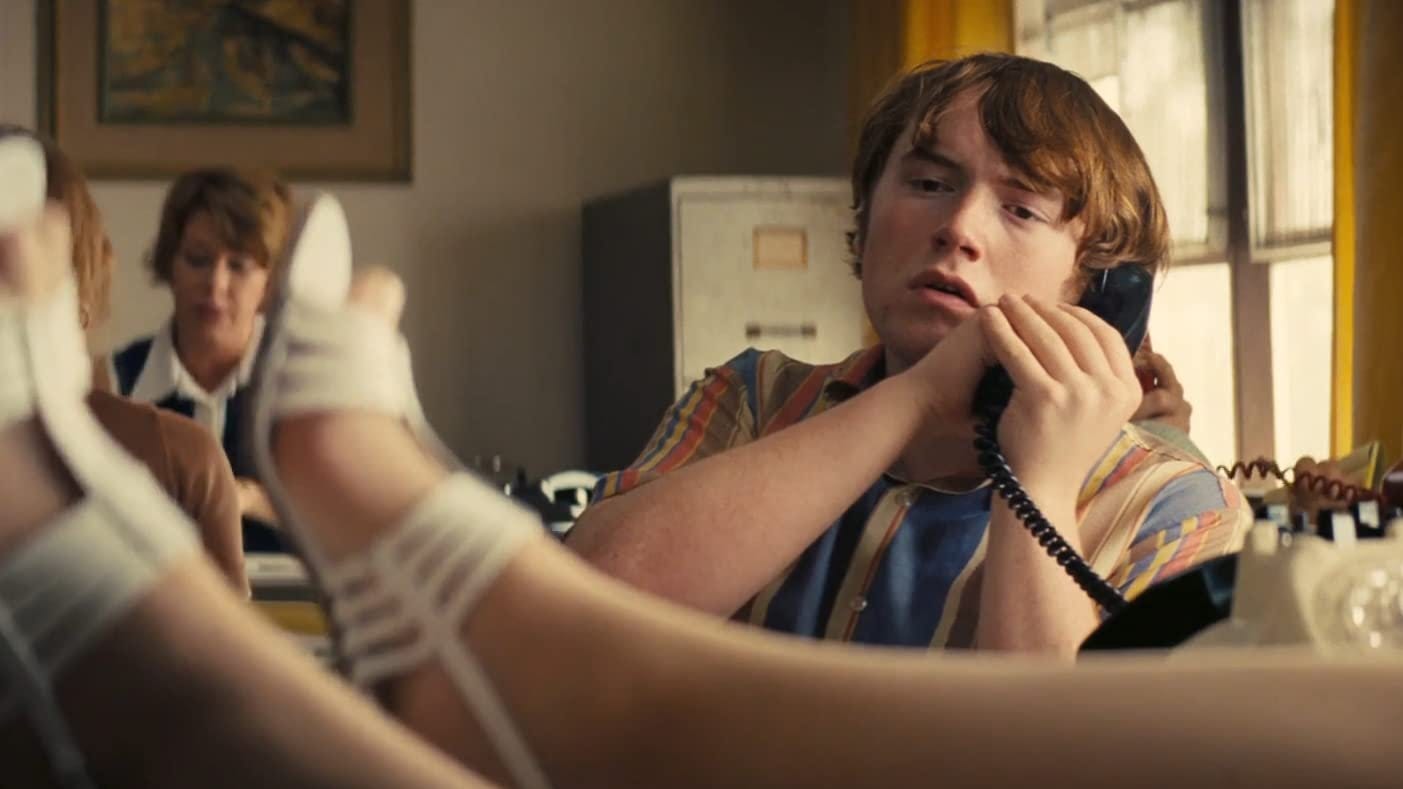
Alana is compelled to answer Gary’s affections. It’s gravitational. She does not just like this person, she aspires to be him. She looks at him the way a problem-solver gazes at a puzzle. Yes, she wants to assemble it and obtain the answers, but she also admires the craft that has gone into this question. She is also human, as is he. This is a portrait of two young people. They want to be wanted. Story of civilization. Used to be.
There’s a moment that makes me sing, a digression that adds nothing to the plot. Gary is arrested, a moment staggering in its casual brutality as well as its disorientation, as the viewer knows of no crime that has been committed. He is whisked away, and Alana’s click-clack heels follow him, spewing nervous, unconvincing threats to the officers. She wants to tell them, “That’s my man,” but instead she half-swallows the truth, “He’s a child.” He is placed in the back of the vehicle. Alana helplessly slaps the window. She runs with the car for a bit, at the pace of the camera. She chases like a big romantic gesture. We laugh because we know it’s just the middle of the movie, and it’s not that kind of movie either. They arrive at the station, and Gary is dragged around, manhandled, re-cuffed. He is in despair – is his life over? And she appears, outside the window. She’s run all the way. It seems highly implausible she’d make it that fast. And there she is. It’s wonderful.
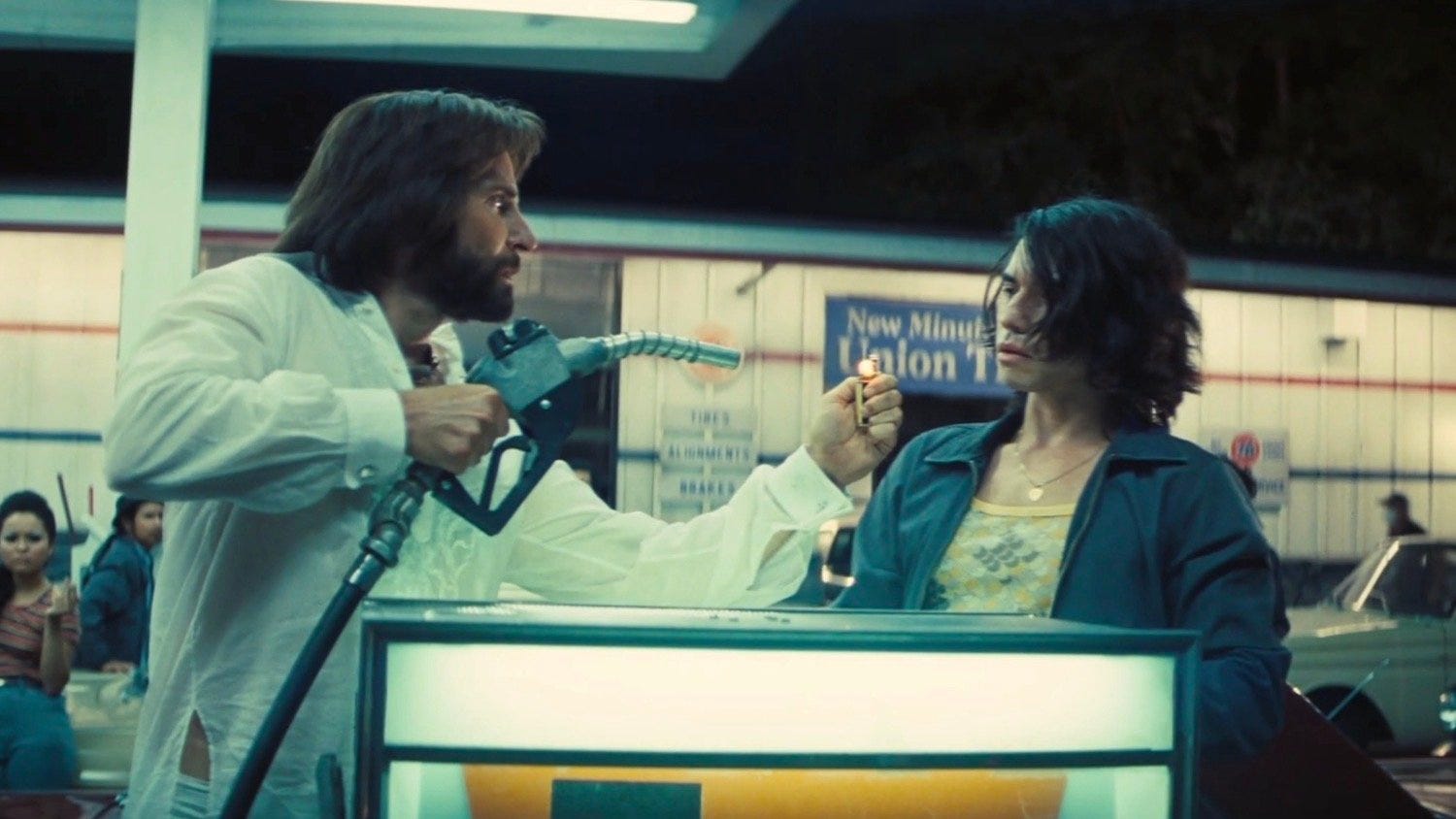
The two weave in and out of each other’s circles as they move in and out of the 1970’s, dazed and confused. There are episodes with special guest stars – Sean Penn shows up as an oily, faded movie star, Tom Waits charming as ever as his gravel-voiced director. Bradley Cooper gets the standout moments as real-life producer Jon Peters, and even mimics the man, repeating one of his infamous mantras by telling someone that they’re both “from the streets.” The Peters interlude leads to a severe “Sorcerer”-coded truck sequence that has more suspense than the last twenty comic book movies combined. It’s uncertain as to whether Cooper Hoffman or Alana Haim will become successful on the big screen, but in that moment, Anderson is dedicated to turning them into stars.
“Licorice Pizza” is a title that has repulsed me – its origins come not from a food but from a record store that has a minimal role in the narrative. But this is a delicate movie, one not suited for the rowdy crowds of the multiplex. It’s about what it’s like to be looked at, and what it feels like to look without reciprocation. It’s about sly smiles and buried shame – the heat inside your cheeks when someone smiles at you like you’re the only one in the world, and the indignity when that flame flickers and dies. It’s about just how stupid jealousy can be, and just how universal. Paul Thomas Anderson may have arguably made more interesting, riskier films. He’s made none warmer.

I know a lot of people get hot and heavy about “punishing criminals.” But it’s good to remind people that, yes, we have rules for how we should treat prisoners. We cannot harm them, we cannot torture them, and as long as they are in custody, their health and safety matters. The Eighth Amendment prevents “cruel and unusual punishment” – you wouldn’t get that from movies and TV, where convicts and criminals are freely treated to physical violence from a steady diet of “peacekeepers.” No, you can’t punch and kick the perps. And yes, they have to be provided medical care.
As part of the pathetic ICE show of demeaning and torturing people out of sheer glee, it seems as if there’s now evidence that there is almost no medical care being given to the detainees at ICE camps. This has been going on since October, and it is no accident. Yes, this will inconvenience many in custody, many of whom are being illegally detained. But also, people will die. These men, women and children require treatment, proper treatment, zero gray area, we have laws specifically to prevent situations like this.
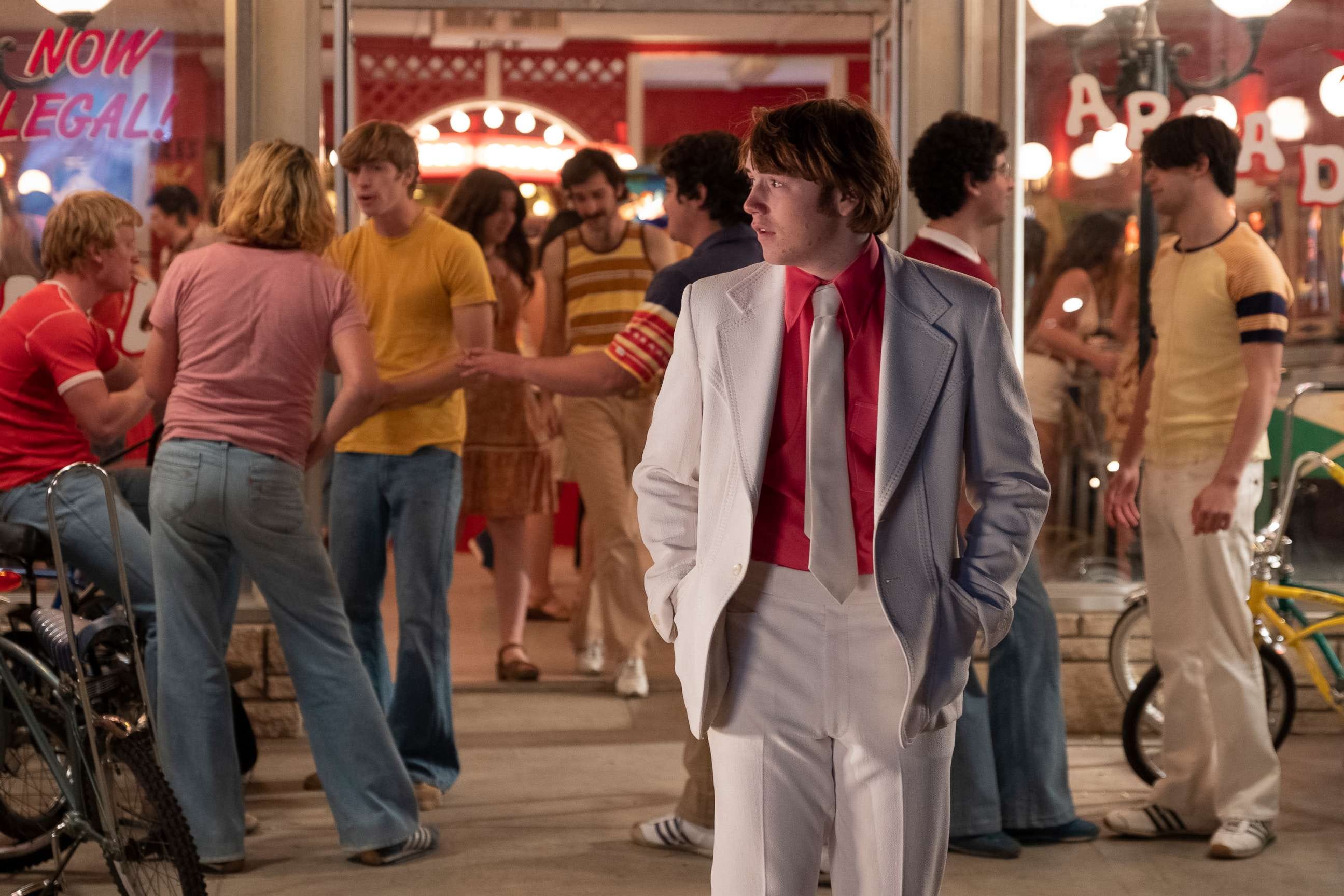
When I was down, most people I met committed their crime out of desperation, out of need, out of broken impulse but also gratuitous wanting. Criminals largely are like that. But this is the US government acting as criminals – not as a necessity, not out of desperation. There is no moral justification for this. They are breaking laws, committing human rights violations, breaking the rules of the Constitution, because cruelty is their fuel. Seems like a petty reason to me.
Just saw this for a third time a couple weeks ago, and it's moved into my Top 5 for PTA movies.
I love this movie and I hate ICE.