
Honey Boy
And They're Shooting At You

I love catching up with movie news and gossip, but I also know the purest experience is when you can watch a movie completely blind, with no context and no preparation. Every once in a while, I treat myself to a completely fresh experience at the movies, but generally I’m seeing something where I’m familiar with the actors, I’ve seen the trailers, and the director has a resume. There is still an open question as to how much you can, or should, know before seeing a film. Can a movie ever really be “spoiled”? By the way, Oppenheimer dies at the end.
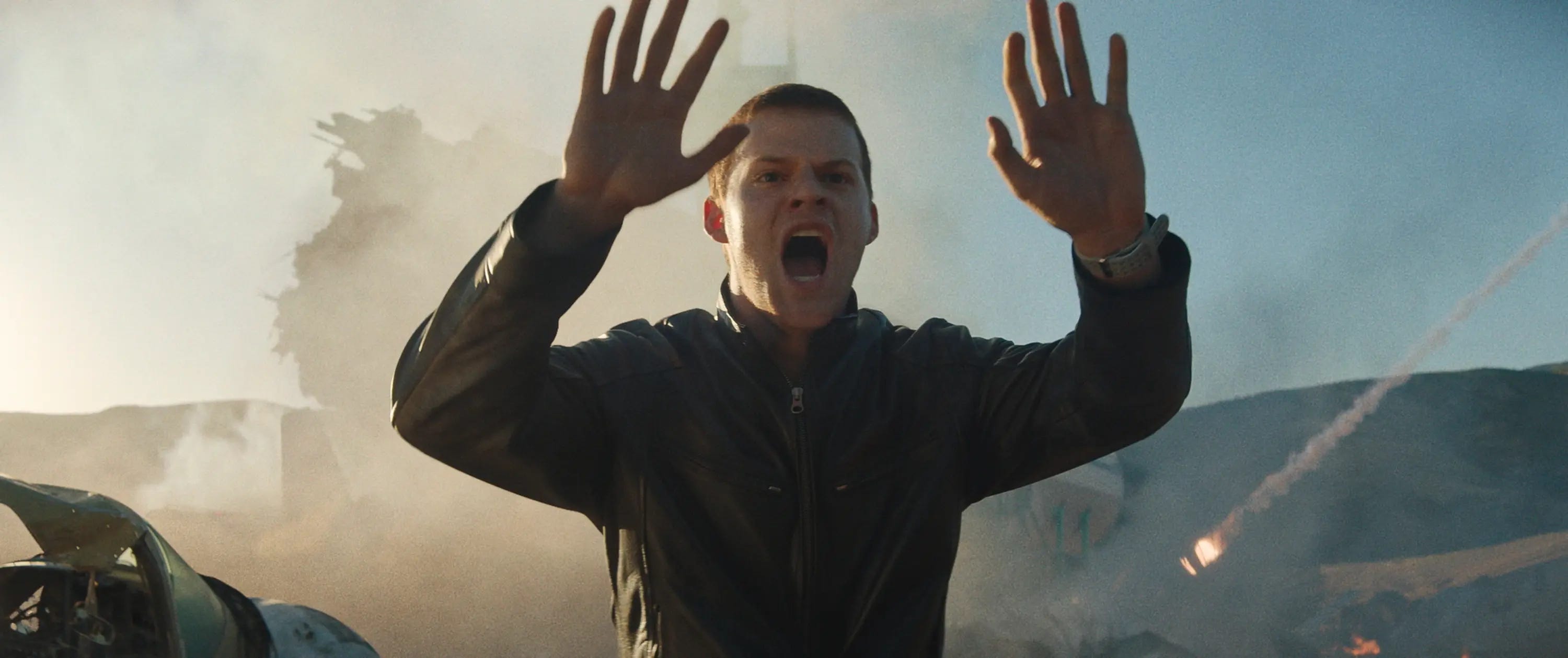
The beginning of “Honey Boy” is an ecstatic, nervy montage of actor Lucas Hedges. In one moment, he’s attached to a harness on the set of a film as pyrotechnics explode around him. Another scene has him at the site of a motor vehicle accident, clearly addled and giving lip to a cop. There’s considerable substance abuse, a little intense sex, and moments of him slipping in and out of consciousness. What I wonder is, if I didn’t know Shia LaBeouf had written this movie – in which he is coincidentally featured in a sizable supporting role – would I still be thinking about the connection? There are several points in this montage, which runs a few minutes, where Hedges yells and complains, and it’s exactly in LaBeouf’s familiar cadence.
The character is named Otis Nort (jeez). All of this is a violent prelude to rehab, which he attends with a big head, the famous guy doing infamous famous-guy penance and performing triage on himself. He’s belligerent, sarcastic and manipulative – in ways familiar to anyone who is an addict. But, also, in the voice and speaking mannerisms of our favorite “Transformers” and “Eagle Eye” superstar. He argues with staff and passive-aggressively bats away their suggestions, suggestions that seem not only built from the language of therapy, but seem designed to combat cynicism while also flattering the rare patient who thinks this highly of himself.
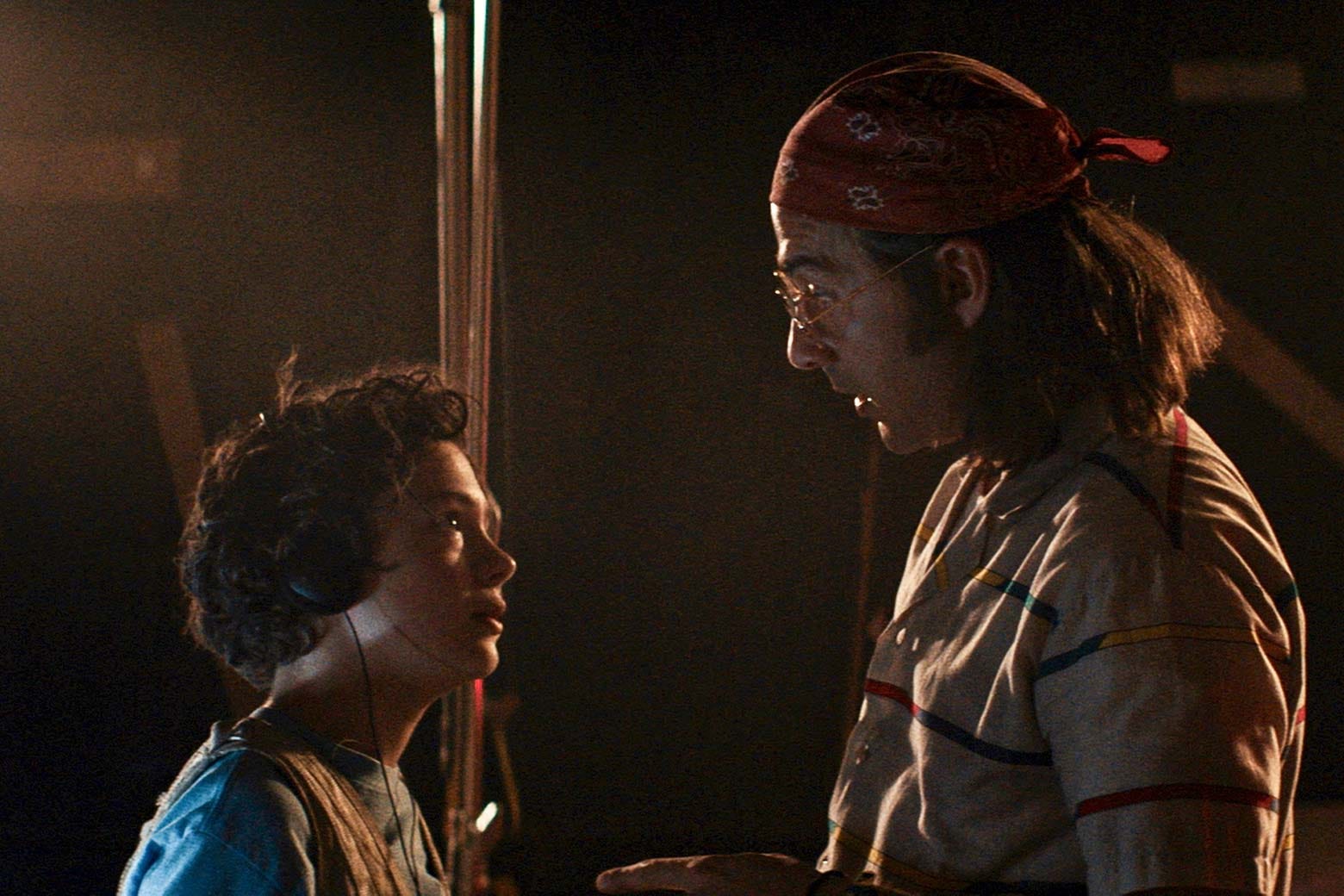
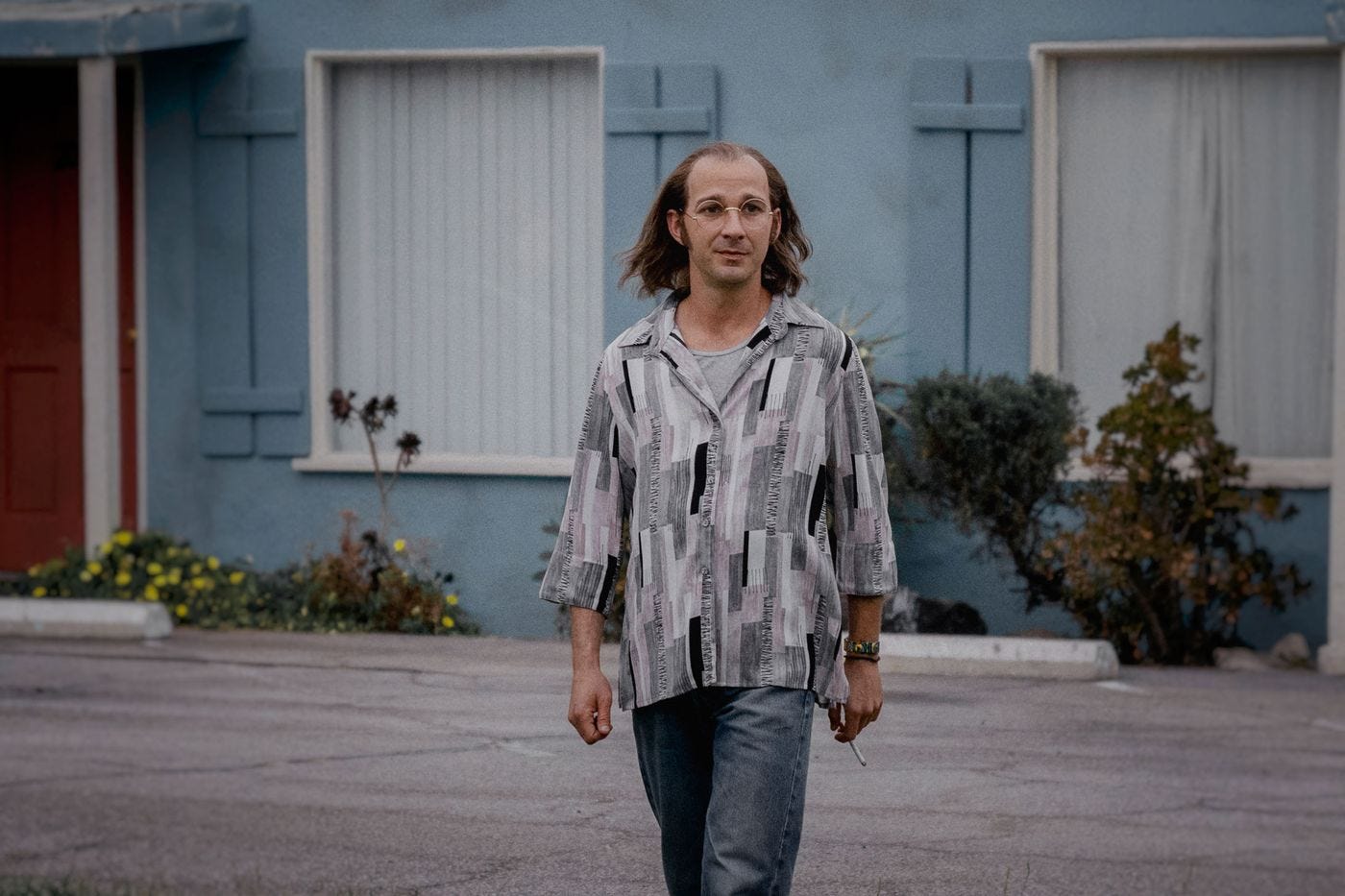
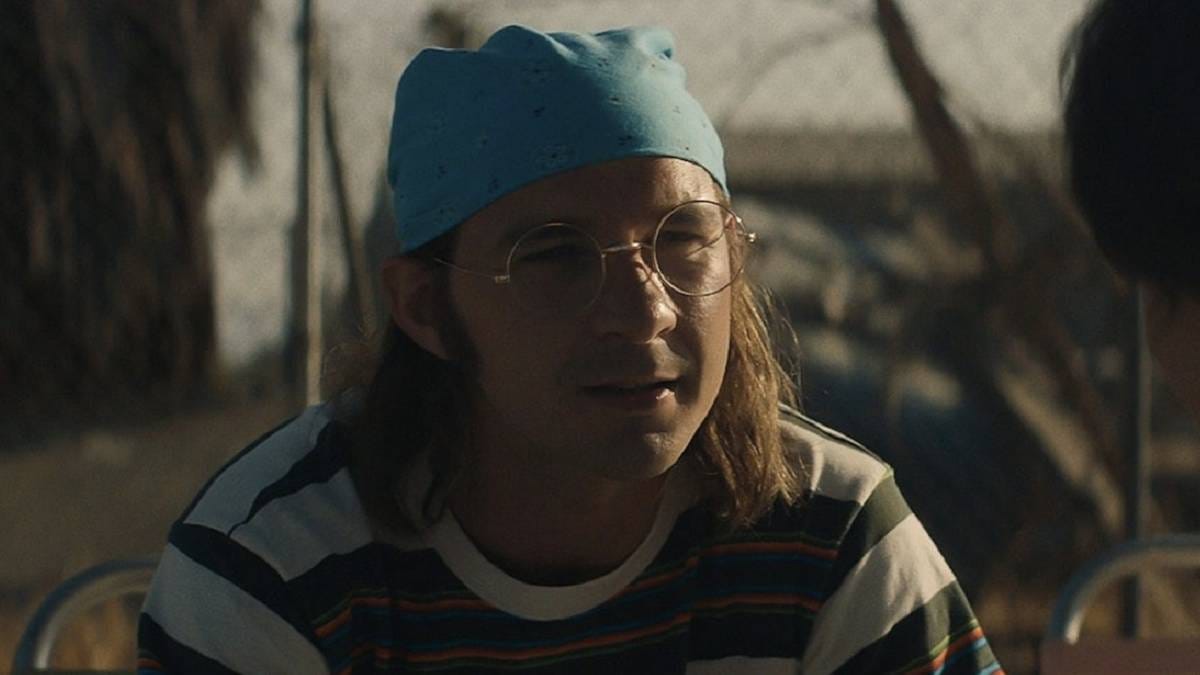
We revisit that plotline many times, but the bulk of this tale occurs ten years earlier. Preteen Otis (Noah Jupe) lives on the outskirts of Los Angeles, in a set of shady motels that seem located in a barren ditch. It’s where he works on his craft as a young actor with his father James. James seems to have tried and failed, just another eccentric artist in Hollywood too eccentric and too difficult to achieve any sort of success. He’s a rodeo clown, but we only see him practice. Perhaps all the rodeos kicked him out. He drinks, he seduces women, and he yells at his son enough that the wig frequently tumbles off his balding head.
It would be a vanity-free turn had this whole thing not been a LaBeouf vanity project, though it’s worth noting that LaBeouf gives a powerful and upsetting performance. Not a loud, grandstanding one, which is what you usually get with an actor who has fulfilled the lowest obligations for several years and is finally getting to test his skill. James is, in every word, a pathetic person. He consistently blurs the lines between friend and father with his son, because he feels a biological need to provide for the child, but a more-desperate cavern in his heart he must fill with validation. He’s broken up with his son’s mother, and from what can be gathered from phone conversations, it wasn’t an amicable separation. Gradually, you realize the child’s paychecks are subsidizing their entire existence, so James is collecting Otis’ career earnings and using them on rent and booze. When James bothers to acknowledge this, he pretends he’s not ashamed. It feels as if there’s an additional layer of shame radiating off that dishonesty.
What we see throughout the narrative are moments when Otis is showing his father he’s growing up and learning to make decisions by himself. Decisions without James. Instead of being proud, James is cruel and self-sabotaging. He honestly sees his preteen son as competition. This is cast in a much uglier light when, while James is gone, Otis finds himself growing closer to his beautiful neighbor (fka twigs, my word). The vibe is friendly, it is casual. And then it is not. This character (credited as Shy Girl, which, c’mon) knows that Otis needs a mother. He also needs a friend. And he needs… a lover? Yeah, that’s Shia LaBeouf, writing a movie where, as a preteen, he’s slanging it with gorgeous grown women. Complicating matters is that LaBeouf went on to date Ms. twigs in real life after this movie, which resulted in her suing him for the pattern of abuse he exhibited during the relationship. I can't co-sign any of that.
Which is to concede that one of the pieces of information I had heard before seeing this film was that, initially, LaBeouf claimed this was a chronicle of his own childhood and his relationship with his father. However, it was years after the movie was released when he finally admitted most of it was made out of whole cloth. Specifically how the film is a hit job against his own father – if you believe what LaBeouf has said, it’s apparent that his father was struck by how little the film had to do with real life, and LaBeouf was laboring under the guilt of having to promote and discuss a movie where his father is a scumbag degenerate who quite desperately needs to be dealt with. Does it affect the movie to know that it is a fabrication? More pointedly, does it matter that LaBeouf actually wrote this in therapy, that he wrote this to exorcise demons? I would think it renders one’s judgment moot, given that it’s something that exists for therapeutic reasons and not entertaining ones. That being said, it’s clearly made to be engaging and involving as well, with its bifurcated structure adding nuance to the varied plot strands. LaBeouf is coping with the turmoil that causes him to abuse substances, but his commercial inclinations haven’t left him behind.

This is, in essence, a movie about a corruptive sort of masculinity. The director is Alma Har’el, who comes from the world of music videos, and she gives the film a soft, elegant touch, one that openly contrasts with the moments of upsetting violence. There are some third act sequences that feel a little idealized, as if all this interpersonal emotional harm can be papered over by some slow-motion dances – a little bit of that goes a long way, but you can forgive Har’el as a first-timer with narrative. Much of “Honey Boy” is shot with a handheld intimacy, and it feels invasive, immediate. A series of interactions you shouldn’t be watching. When James cracks a beer, you’re inclined to turn your head, as if you were in the room and trying not to look. This is a striking and powerful debut. Sadly, it was almost a decade ago. Personally, I’d love to see her work again in this particular sphere — particularly without having to shoot LaBeouf’s pubescent sex fantasies, if we’re making requests.
I do think the current perversion of criminal justice is occurring in plain sight, which has a dual effect. The people who need to know are being told and it’s up to them to listen. But the sheer volume of each transgression has created a firehouse of malfeasance, to the point where people act on confirmation bias, believing that there is no way something can be true simply because it wasn’t headline news. So when we talk about violent weapons being used against the American people, it almost sounds like hyperbole to people who haven’t followed these incidents directly.
The term to understand is “less-lethal weapons”, which is both misleading and a massive p.r. victory. The term’s official explanation is that these are weapons that are designed or intended to be used in a manner that is not likely to cause death or serious bodily injury. Which is a phrase that gives as much leeway as the government can possibly hope for. As the link above explains, yes, these are absolutely deadly weapon that can kill, and they’re being placed in the hands of men and women who are told not to use them lethally. These weapons are being used against protesters, they are being used to silence dissent and scare others into not expressing views that run counter to the government. If you can’t be criminalized, you will be shot at. This is the legacy of this administration.